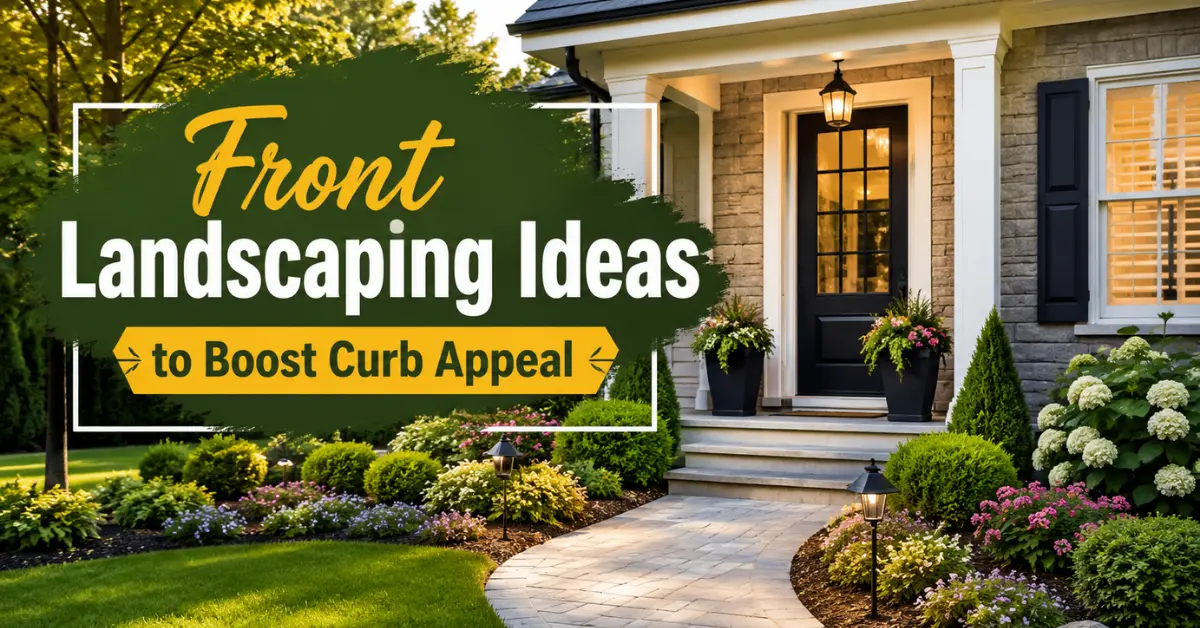
Your front yard tells a story before anyone ever knocks on your door. It is the first thing neighbors see, the first impression guests get, and honestly — it sets the mood for your entire home. Whether your front landscaping is currently a patch of scraggly grass or a blank slate of dirt, the good news is this: transforming it does not have to be complicated or expensive.
This guide walks you through everything — from planning your layout, to picking the right plants, to the small details most people overlook. Let’s get into it.
Start Here: What Most People Skip (The Planning Step)
Before you buy a single plant or bag of mulch, take 20 minutes to evaluate your space. This one step saves you money and frustration down the line.
Ask yourself:
- How much sunlight does your front yard get daily? (Full sun = 6+ hours, part sun = 3–6 hours, shade = under 3 hours)
- Is your soil sandy, clay-heavy, or loamy? Clay drains poorly; sandy soil dries out fast. Both need amending before planting.
- Does your front yard slope, or is it flat? Slopes need erosion control; flat yards need good drainage.
- How much time can you realistically give to maintenance each week?
- Does your HOA have landscaping rules? (Always check before digging up your lawn.)
One thing competitors rarely mention: check your soil before anything else. Most front yards that once held only grass have compacted, nutrient-poor soil. Break it up and add compost before planting — your plants will thrive instead of just surviving.
Choose a Style That Matches Your Home
Your front landscaping should feel like it belongs with your house, not fighting against it. Here is a quick style guide:
Colonial or Traditional Home
Go with symmetrical plantings, clipped boxwood hedges, brick pathways, and classic flowers like hydrangeas and roses. Keep it tidy and structured.
Cottage or Farmhouse Home
Embrace a soft, slightly wild look. Lavender, coneflowers, ornamental grasses, and climbing roses on a picket fence all feel right at home here.
Modern or Contemporary Home
Think clean lines, gravel mulch, low-growing plants with uniform spacing, and concrete pavers. Limit your color palette to two or three shades.
Ranch-Style Home
Long, low planting beds work beautifully. Choose plants that flow horizontally — ornamental grasses, creeping phlox, and ground covers.
Craftsman Home
Layer plants with varying heights. Mix native perennials with evergreen shrubs and use natural stone or wood elements.
Front Landscaping Ideas by Category
1. Foundation Planting: Frame Your Home Beautifully
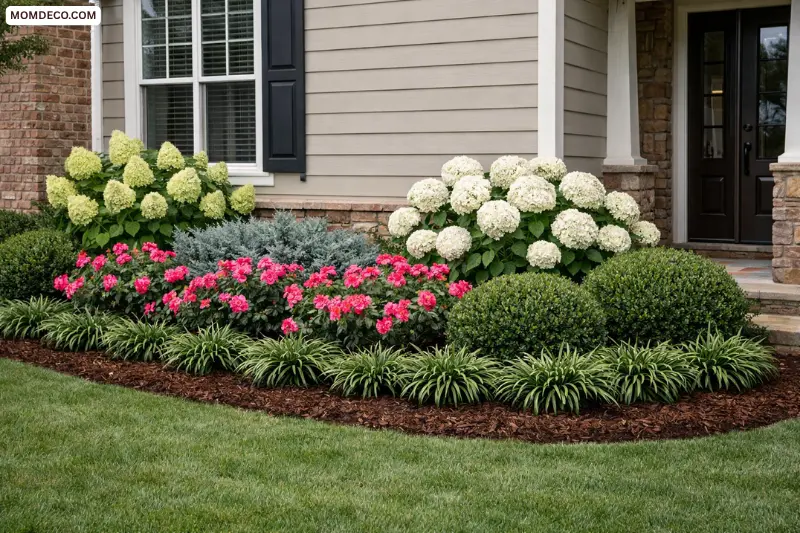
Foundation planting is the area directly along the front of your house. Done right, it softens harsh architectural lines and makes your home look grounded and intentional.
The golden rule: place taller plants toward the back (or against the house wall) and shorter plants toward the front edge of the bed. This creates depth and keeps everything visible.
Best foundation plants:
- Dwarf boxwood — evergreen, holds shape well, minimal pruning
- Knock Out roses — blooms spring through fall, disease-resistant
- Blue Star juniper — silvery-blue color, great year-round texture
- Liriope (monkey grass) — works as a border, stays green in winter
- Hydrangeas — big, showy blooms; ‘Incrediball’ and ‘Limelight’ are standouts
Keep beds mulched with 2–3 inches of hardwood mulch. It suppresses weeds, retains moisture, and gives the whole bed a polished, finished look.
2. Front Yard Pathways: Guide the Eye (and the Feet)
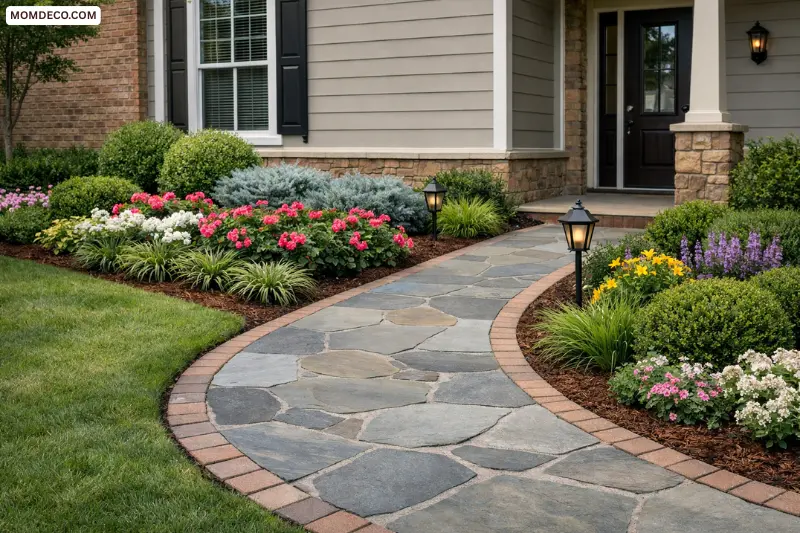
A walkway does more than connect your driveway to your front door — it sets the visual rhythm of your entire front yard.
- Straight paths: feel formal and classic. Great for colonial or traditional homes.
- Curving paths: feel relaxed and inviting. Gentle curves are easier to mow around and naturally slow visitors down, giving them time to appreciate your landscaping.
Material options:
- Bluestone or flagstone — timeless, durable, blends with plants naturally
- Concrete pavers — clean and modern; works especially well for contemporary homes
- Gravel with stepping stones — budget-friendly and visually interesting
- Brick — warm, classic look that pairs well with traditional architecture
Pro tip no one talks about: make your main walkway at least 4 feet wide. Most homeowners default to narrow paths, but a wider walkway looks more intentional, allows two people to walk side by side, and feels genuinely welcoming.
3. Low-Maintenance Front Landscaping: Look Good Without the Work
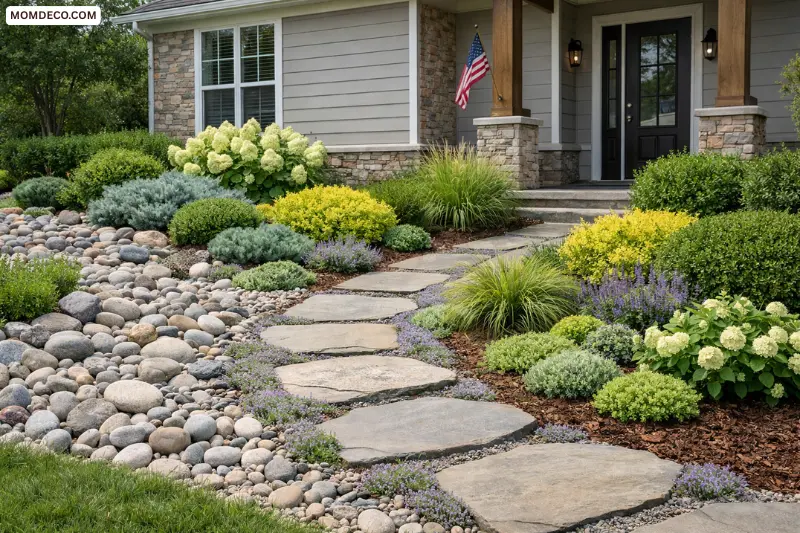
This is the category most people actually need, but few articles address honestly. Here is the truth: a beautiful front yard does not require hours of weekly work — if you plan it right.
Replace high-maintenance grass with:
- Creeping thyme — fills gaps between stepping stones, smells amazing when stepped on, handles foot traffic
- Ornamental grasses — require only one annual cut-back in early spring
- Sedum ground cover — drought-tolerant, spreads slowly, no mowing needed
- River rock or gravel mulch — zero maintenance once installed; pairs well with succulents and native plants
Choose shrubs that do not need constant shaping:
- Little Lime hydrangea
- Spirea (Gold Mound or Double Play varieties)
- Mugo pine
- Yew shrubs
Mulch is your best friend. A fresh layer of mulch every spring cuts weeding time dramatically and makes every bed look intentional and polished.
4. Drought-Tolerant Front Landscaping
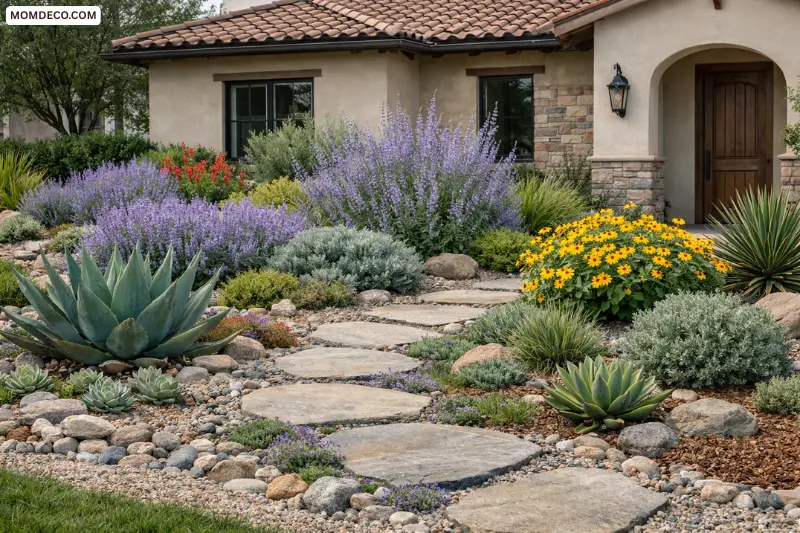
Whether you live somewhere dry or simply want to use less water, designing around drought-tolerant plants is a smart long-term choice.
Great drought-tolerant plants for the front yard:
- Lavender — gorgeous, fragrant, and thrives in dry, sunny spots
- Salvia — bold color, attracts pollinators, very little water needed once established
- Russian sage — tall, airy purple blooms, incredibly tough
- Black-eyed Susan — cheerful yellow flowers, native to many regions
- Agave and succulents — ideal for warm, dry climates; striking architectural look
Important: Even drought-tolerant plants need regular watering for the first growing season while their roots establish. After that, rainfall alone is often enough.
5. Front Yard Lighting: The Most Underused Upgrade
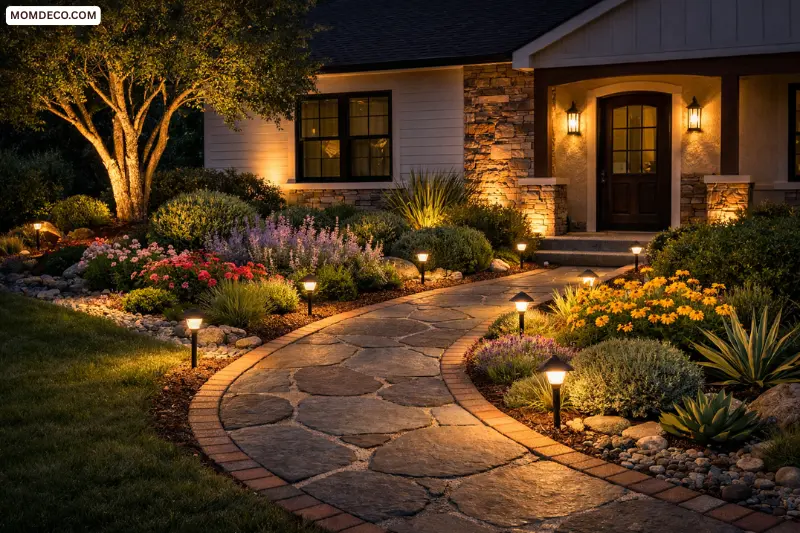
Here is something most landscaping articles barely touch on: landscape lighting transforms your front yard at night and most homeowners never bother with it.
Done well, front yard lighting adds drama, depth, safety, and security — all at once.
Types of landscape lighting to consider:
- Path lights — line your walkway; solar-powered options are easy and affordable
- Uplights — placed at the base of a tree or large shrub, shining upward; turns an ordinary tree into a stunning focal point after dark
- Downlights or floodlights — mounted in trees or on the house, casting soft light over a flower bed
- Accent spotlights — highlight a specific architectural feature or your front door
Warm-white bulbs (2700K–3000K) give the most inviting, flattering glow. Cool-white or blueish lights tend to feel harsh and unfriendly.
6. Seasonal Color: Keep Your Front Yard Looking Fresh Year-Round
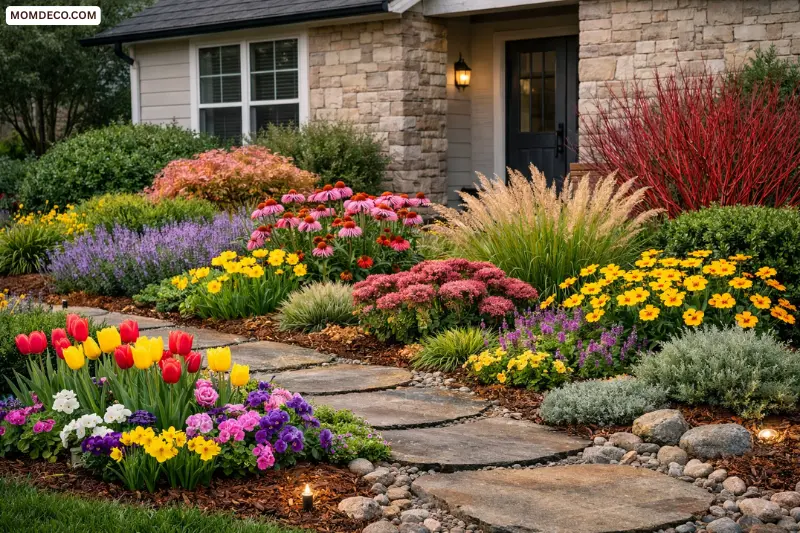
One thing that separates a truly stunning front yard from a mediocre one is four-season interest. Here is how to plan for it:
- Spring: Tulips, daffodils, pansies, bleeding heart
- Summer: Coneflowers, daylilies, black-eyed Susans, petunias, zinnias
- Fall: Ornamental grasses (seed heads look beautiful), asters, mums, sedum ‘Autumn Joy’, burning bush for red foliage
- Winter: Evergreen shrubs, red-twig dogwood, holly with berries, ornamental cabbage
The trick is layering. Plant spring bulbs beneath summer perennials. When the bulbs die back, the perennials grow up to fill the space. Nothing goes bare; nothing looks messy.
7. Front Yard Focal Points: Give the Eye Somewhere to Land
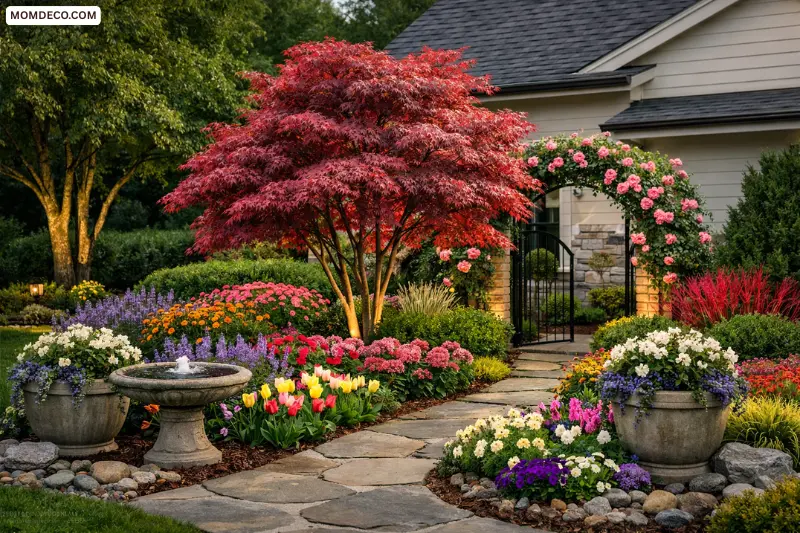
Every great front landscaping design has at least one focal point — something that draws the eye and anchors the whole look.
Ideas for front yard focal points:
- A specimen tree (Japanese maple, weeping cherry, or redbud are all stunning)
- A decorative garden gate or arbor covered in climbing roses or wisteria
- A large container planted with a dramatic combination (thriller + filler + spiller formula)
- A birdbath or small water feature with moving water
- A bold front door color flanked by matching potted plants
Do not try to create five focal points. Pick one or two. The goal is a clear visual hierarchy — your eye should know exactly where to look first.
8. Small Front Yard Landscaping: Big Impact, Tight Space
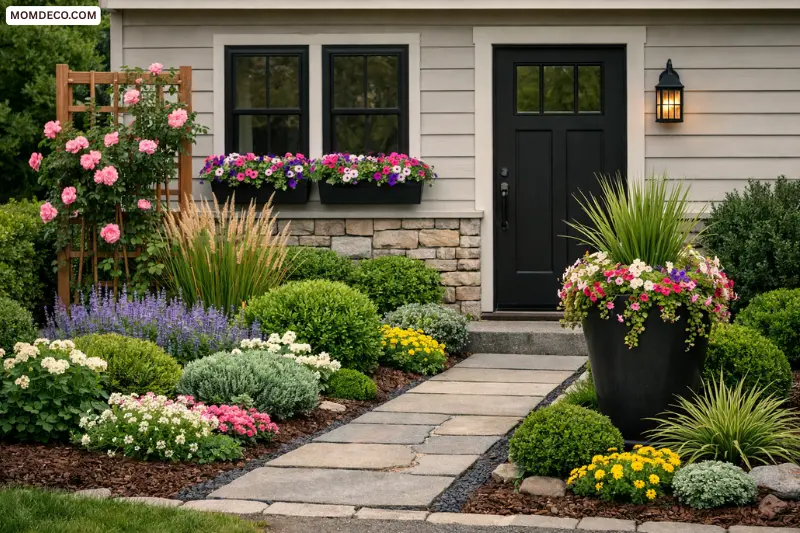
Small front yards are not a limitation — they are an invitation to be intentional. Every inch matters, and that actually makes them easier to design beautifully.
Tips specific to small spaces:
- Use vertical elements (a climbing rose on a trellis, tall ornamental grasses, a slender columnar shrub) to draw the eye upward and make the space feel larger
- Choose small or dwarf plant varieties — they will not outgrow their spots and overwhelm the space
- Window boxes add color without taking up ground space at all
- Keep hardscape clean and simple — one good pathway with neat edging does more than a complicated design
- A single bold container by the front door can do more visual work than a whole cluttered bed
9. Budget-Friendly Front Landscaping Tips
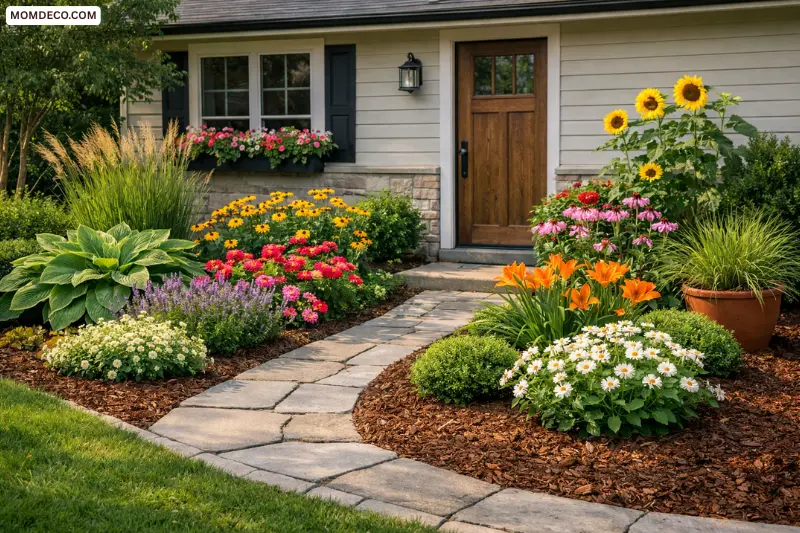
You do not need to spend thousands to have a beautiful front yard. Here is where to save money without cutting corners:
- Buy perennials, not annuals — perennials come back every year; annuals need replacing each season
- Start from seed — flowers like zinnias, sunflowers, and black-eyed Susans cost pennies from seed versus dollars as transplants
- Divide plants from neighbors or friends — hostas, daylilies, and ornamental grasses divide easily. Ask around; most gardeners are happy to share
- Shop end-of-season sales — nurseries discount plants heavily in late summer and fall; plants bought then often establish just as well
- Use mulch generously — a fresh layer of mulch is the cheapest transformation you can make; it instantly makes everything look intentional and neat
- Edge your beds — clean, sharp edges on planting beds cost nothing but time and make even a simple front yard look professionally done
The Details That Tie Everything Together
These finishing touches separate a good front yard from a great one:
- House numbers: Make sure they are visible from the street. Oversized or illuminated house numbers add a modern, polished touch.
- Front door: A freshly painted front door in a complementary color is one of the highest-ROI updates you can make. Classic choices: red, navy, deep green, or black.
- Porch accessories: A simple doormat, a wreath, and one or two matching planters flanking the front door create an instantly welcoming entrance.
- Gutters and downspouts: No one talks about this, but clean, rust-free gutters are part of your curb appeal. Rusted or sagging gutters undermine even beautiful landscaping.
- Driveway edging: Planting a low border of flowers or ornamental grass along your driveway edge softens the hardscape and ties the whole front landscaping design together.
Quick Reference: Front Landscaping by Goal
| Your Goal | Best Approach |
|---|---|
| Low maintenance | Native plants, ornamental grasses, gravel mulch |
| Maximum curb appeal | Foundation planting + pathway + focal point |
| Budget-friendly | Perennials, seeds, dividing plants, fresh mulch |
| Drought tolerance | Lavender, salvia, succulents, river rock |
| Small yard | Vertical elements, dwarf plants, window boxes |
| Year-round color | Layer spring bulbs, summer perennials, fall grasses, evergreen shrubs |
FAQs
How much does front landscaping typically cost?
covers DIY vs. professional price ranges so readers know what to expect before they start.
What is the easiest front yard landscaping for beginners?
targets first-timers searching for simple entry points, a high-search-volume audience.
How do I landscape my front yard without grass?
addresses the growing no-lawn trend and captures that specific search intent.
Which plants are best for front yard curb appeal?
one of the most commonly searched front landscaping questions with specific plant names for added SEO value.
How do I make my front yard look more expensive without spending a lot?
a popular search angle that also reinforces your best budget tips from the article body.
Final Thoughts
The best front landscaping is the kind that fits your life. If you love to garden, go ahead and plant a layered cottage garden full of perennials that need tending. If you want to mow once a week and call it done, design around low-maintenance shrubs and ground covers. Either way, start with a plan, pick plants suited to your light and soil, and do not underestimate the power of small details — lighting, edging, a fresh coat of paint on the front door. Those finishing touches are what make a front yard feel truly complete.
Your home deserves a front yard that matches everything going on inside it. Start with one section, do it well, and build from there.