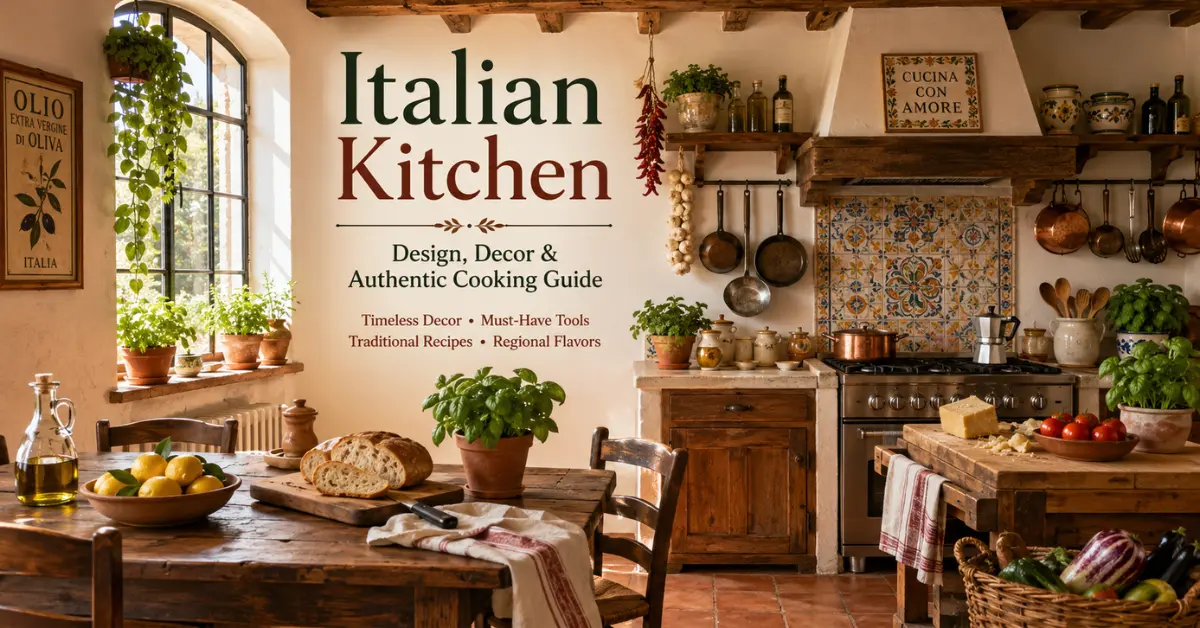
The Italian kitchenis unlike any other space in the world — it is not merely a room where food is prepared, but the living heart of the entire home, where the rhythms of daily life slow down and something meaningful happens. Walk into a traditional Italian kitchen and you immediately feel it: the warmth of terracotta floor tiles, the scent of garlic softening in golden olive oil, a pot of tomato sauce bubbling quietly on the stove, and a wooden board dusted with flour where someone is rolling fresh pasta by hand.
The Italian kitchen is built on natural materials — solid wood cabinets, marble countertops, open shelves lined with ceramic dishes and bottles of extra virgin olive oil — because Italians have always understood that a kitchen should age beautifully alongside the family it serves. The color palette is warm and earthy: deep terracotta, creamy linen, olive green, and the soft gold of afternoon sunlight through a window where pots of fresh basil sit on the sill.
Everything in an Italian kitchen has a purpose and a presence, from the moka pot that brews espresso every morning, to the large dining table at the center where the family gathers not just to eat but to talk, laugh, and linger long after the meal is finished. Italian cooking follows the same spirit — rooted in simplicity, seasonality, and a refusal to complicate what is already perfect, guided by the timeless philosophy of cucina povera, which turned stale bread into ribollita and humble beans into something transcendent.
Italian Kitchen: The Complete Guide to Design, Decor, and Authentic Cooking
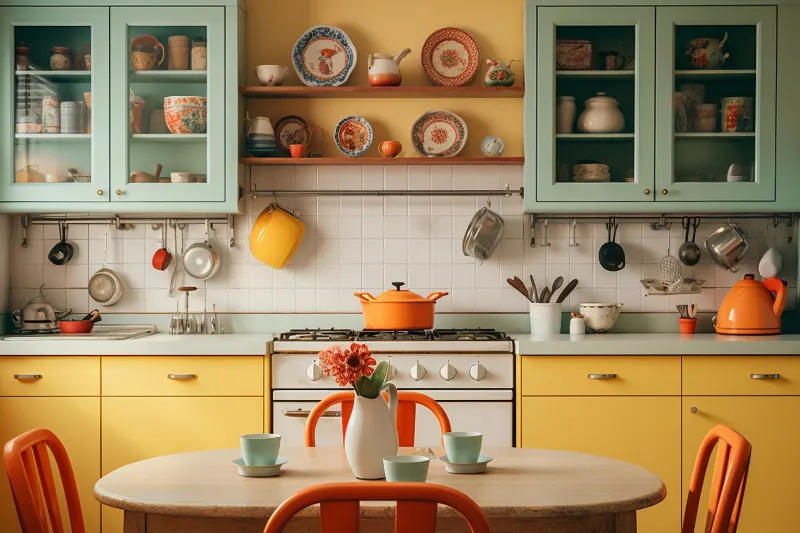
The Italian kitchen is more than just a room where meals are prepared — it is the heart of the home. In Italy, the kitchen is where families gather, stories are shared, and centuries-old recipes are passed down from one generation to the next. Whether you want to redesign your space, cook authentic Italian dishes, or simply understand what makes an Italian kitchen so special, this guide covers everything you need to know.
What Makes an Italian Kitchen Unique?

An Italian kitchen stands apart from any other kitchen in the world. It blends beauty with function, tradition with modern living, and simplicity with richness. Here is what defines it:
- Warmth and character — Natural materials like wood, stone, and terracotta give Italian kitchens a welcoming, lived-in feel.
- Open shelving — Dishes, olive oil bottles, and fresh herbs are displayed openly, turning everyday items into decor.
- A central gathering space — The kitchen table is always large enough for the whole family and often doubles as a workspace for rolling pasta.
- Rich aromas — Garlic, fresh basil, simmering tomato sauce, and baked bread are the everyday scents of an Italian kitchen.
- Connection to the pantry — A well-stocked Italian kitchen always has a larder filled with canned tomatoes, dried pasta, extra virgin olive oil, and aged cheeses.
Italian Kitchen Design and Decor: How to Get the Look
One area that many Italian cooking blogs overlook entirely is how to design and style an Italian kitchen. If you want your space to reflect true Italian character, here are the key design elements to focus on.
Color Palette
The classic Italian kitchen uses warm, earthy tones. Think:
- Terracotta orange and warm rust
- Creamy off-white and aged linen
- Deep olive green
- Rich walnut brown
- Stone gray with warm undertones
Avoid cold, sterile whites or harsh grays — they clash with the warmth that defines Italian style.
Materials and Surfaces
Italian kitchens favor natural, durable materials that age beautifully:
- Marble or travertine countertops — Marble is iconic in Italian kitchens, especially in regions like Tuscany and Lombardy.
- Terracotta floor tiles — Nothing says Italian kitchen more than handmade terracotta floor tiles.
- Wood cabinetry — Solid walnut, chestnut, or cherry wood cabinets with simple hardware add authenticity.
- Stone backsplash — Rough-cut stone or hand-painted ceramic tiles, especially Sicilian-style majolica tiles, make stunning backsplashes.
Lighting
Good lighting is essential in an Italian kitchen. Use warm-toned bulbs and layer your lighting:
- Pendant lights over the kitchen island or table
- Under-cabinet lighting to illuminate work surfaces
- A statement chandelier for a traditional farmhouse feel
Decor Touches That Bring Italian Style to Life
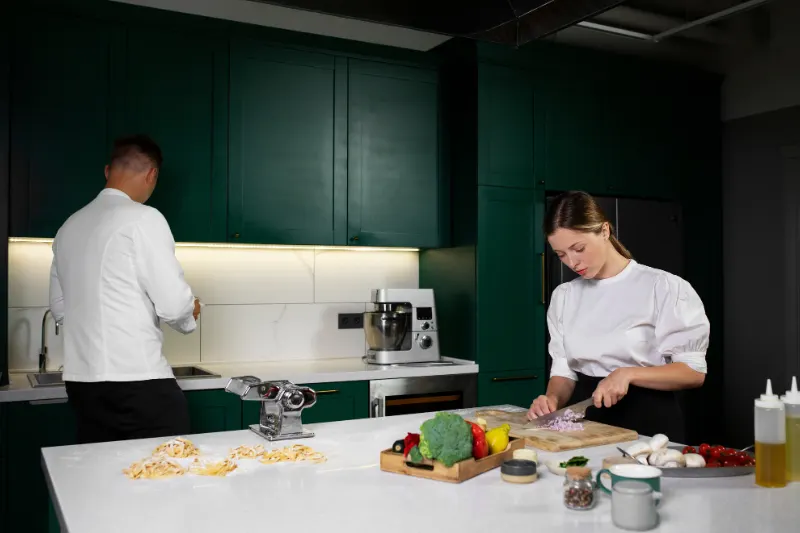
These small details make a huge difference:
- Hang a string of garlic or dried chili peppers near the window
- Display a wooden bread board and a mortar and pestle on the counter
- Keep a ceramic olive oil pourer and a salt pig near the stove
- Use woven baskets for storing vegetables
- Place fresh herbs — basil, rosemary, thyme — in small terracotta pots on the windowsill
- Use linen or cotton dish towels in rustic patterns
Must-Have Tools in an Authentic Italian Kitchen
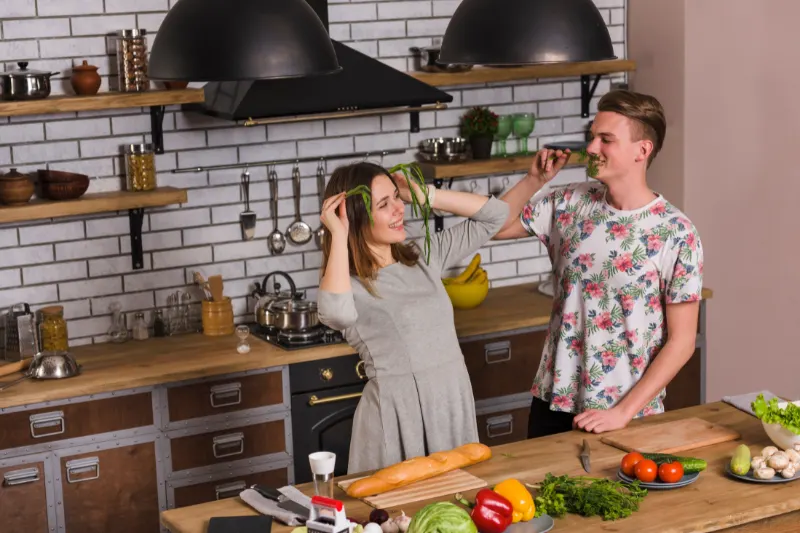
- An Italian kitchen is only as good as its tools. Here is what you will find in every authentic Italian home kitchen:
- Pasta machine — For making fresh tagliatelle, pappardelle, and lasagna sheets
- Wooden cutting board (tagliere) — A large, heavy board for chopping vegetables and slicing bread
- Large stockpot — For boiling pasta in plenty of salted water
- Heavy-bottomed sauté pan — Essential for slow-cooked ragù and sauces
- Mezzaluna — A curved blade for chopping herbs quickly
- Mortar and pestle — For grinding spices and making pesto the traditional way
- Ceramic baking dish — For lasagna, eggplant parmigiana, and gratins
- Moka pot — The stovetop espresso maker found in every Italian household
- The Italian Kitchen Pantry: Ingredients You Always Need
A stocked Italian kitchen pantry is what allows an Italian cook to put a delicious meal on the table any night of the week without a special trip to the store.
Pantry staples every Italian kitchen needs:
- Extra virgin olive oil (always a good quality one)
- Dried pasta — at least 3 or 4 shapes
- Canned San Marzano tomatoes
- Dried lentils, cannellini beans, and borlotti beans
- Arborio rice for risotto
- Parmigiano-Reggiano and Pecorino Romano (keep a block, not pre-grated)
- Dried porcini mushrooms
- Anchovies packed in olive oil
- Capers and olives
- Dried oregano, chili flakes, and bay leaves
- Breadcrumbs (pangrattato) for coating and topping dishes
Italian Kitchen Cooking Traditions You Should Know

What separates an Italian kitchen from any other is its deep connection to tradition and seasonality.
Cook With the Seasons
Italian home cooks build their meals around what is fresh and available. In summer, they make fresh tomato sauces, zucchini dishes, and grilled fish. In winter, they slow-cook beans, braise meats, and fill the kitchen with the warmth of baked pasta.
Respect the Simplicity
is not about complicated techniques or long ingredient lists. A plate of spaghetti aglio e olio — pasta with garlic, olive oil, and chili — made perfectly is more impressive than an overcomplicated dish. The Italian kitchen teaches you to let good ingredients speak for themselves.
The “Cucina Povera” Philosophy
Cucina povera — literally “poor kitchen” — is one of the most important concepts in Italian cooking. It refers to the tradition of using humble, inexpensive ingredients and wasting nothing. Stale bread becomes bruschetta or ribollita. Vegetable scraps make broth. Leftover pasta is fried into a frittata. This philosophy is not only delicious — it is deeply sustainable.
Regional Differences Matter
Italy has 20 regions, and each one has its own distinct kitchen identity:
- Emilia-Romagna — The heartland of pasta, Parmigiano-Reggiano, prosciutto, and mortadella
- Sicily — Bold flavors with Arab, Greek, and Spanish influences: caponata, arancini, fresh seafood
- Tuscany — Rustic simplicity with white beans, bistecca Fiorentina, and ribollita
- Campania (Naples) — Home of pizza, fresh mozzarella di bufala, and Neapolitan ragù
- Veneto — Risotto, polenta, seafood, and the famous tiramisu
Italian Kitchen Decor Ideas by Room Style
If you are decorating your home with Italian kitchen inspiration, here are three popular styles to consider:
Tuscan Farmhouse
Exposed wooden ceiling beams, deep terracotta tiles, heavy wood furniture, and a large stone fireplace. Colors are warm amber, rust, and cream. This style feels ancient, grounded, and deeply comforting.
Modern Italian (Milano Style)
Clean lines, handle-free lacquered cabinets, Carrara marble countertops, and integrated appliances. The color palette is softer — white, pale gray, and matte black accents. This is the Italian kitchen reimagined for contemporary urban living.
Southern Italian Coastal
Brightly patterned majolica tiles, whitewashed walls, turquoise and yellow accents, and open shelving filled with colorful ceramics. This style brings the spirit of Amalfi, Sicily, and Puglia directly into your home.
How to Make Your Kitchen Smell Like an Italian Kitchen
One thing you can start doing right now — before any renovation — is filling your kitchen with authentic Italian aromas:
- Simmer a pot of tomato sauce with garlic and basil on a Sunday morning
- Toast a slice of bread and rub it with raw garlic and good olive oil
- Brew a moka pot of espresso in the afternoon
- Keep a bunch of fresh rosemary in a glass of water on the counter
- Bake a simple focaccia and let the smell of olive oil and rosemary fill the room
Final Thoughts
The Italian kitchen is one of the most admired kitchen styles in the world — not because it is expensive or complicated, but because it is deeply human. It values warmth over perfection, tradition over trends, and the pleasure of a shared meal above all else.
Whether you are redesigning your kitchen with Italian decor, stocking your pantry with authentic Italian staples, or simply learning to cook the way Italian nonnas have cooked for centuries, the Italian kitchen offers a beautiful way of life worth embracing.
Start small. Buy a good bottle of extra virgin olive oil. Plant a pot of basil. Cook a simple tomato sauce on Sunday. The Italian kitchen begins there.
What is the most important feature of an Italian kitchen design?
The most important feature is warmth. Italian kitchens prioritize natural materials, earthy colors, and a welcoming atmosphere over sleek, minimalist aesthetics. The kitchen should feel like the most inviting room in the house.
What type of flooring is best for an Italian-style kitchen?
Terracotta tiles are the most authentic choice for an Italian kitchen floor. They are warm, durable, and improve in character as they age. Stone tiles — travertine or slate — are also excellent options.
What is cucina povera and why does it matter?
Cucina povera is the Italian tradition of cooking with humble, affordable ingredients and wasting nothing. It gave rise to some of Italy’s most beloved dishes and is increasingly admired worldwide for being both delicious and sustainable.
What colors work best for Italian kitchen cabinets?
Deep walnut or chestnut wood stains are the most classic choice. If you prefer painted cabinets, soft sage green, warm cream, or deep terracotta work beautifully with an Italian aesthetic.
Is it expensive to create an Italian kitchen at home?
It does not have to be. Many of the most authentic Italian kitchen touches — open shelving, terracotta pots of herbs, wooden cutting boards, a moka pot, and a good olive oil — are affordable. Start with the details and build from there.
What is the role of the kitchen in Italian family life?
In Italy, the kitchen is the center of family and social life. Meals are rarely rushed. Sunday lunch can last three hours. The kitchen is where children learn to cook, where grandparents share stories, and where friendships are deepened over food and wine.
How can I make a small kitchen feel more Italian?
Use open shelves instead of upper cabinets, display colorful ceramics, add a few terracotta pots of herbs on the windowsill, choose warm lighting, and always keep good olive oil and fresh bread on the counter. Even a small kitchen can feel rich with Italian character.
Conclusion
The Italian kitchen is not a trend — it is a tradition built over centuries, and its appeal endures because it speaks to something deeply human: the desire to gather, to nourish, and to find beauty in everyday life. Whether you are decorating your space with warm terracotta and open shelves or learning to cook a slow Sunday ragù, embracing the Italian kitchen means choosing warmth over perfection and connection over convenience. It is, quite simply, one of the most beautiful ways to live.