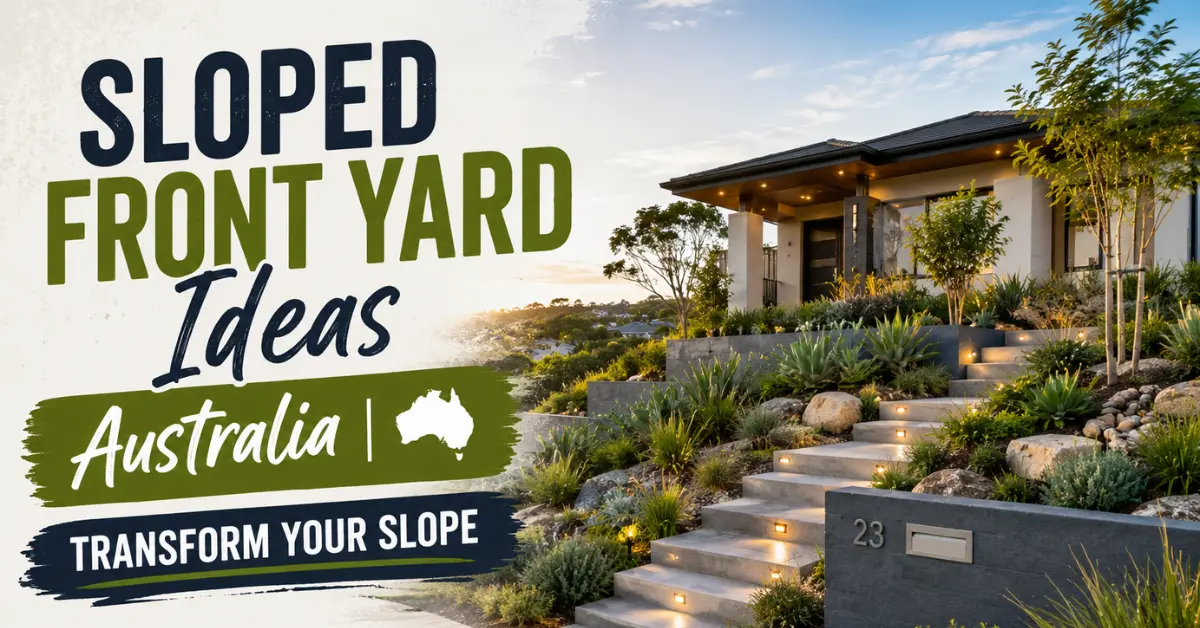
A sloped front yard can feel like a headache at first. Uneven ground, soil washing away after rain, and no idea where to even start — it’s a lot. But here’s the truth: a sloped front yard is one of the best design opportunities you can get. With the right sloped front yard ideas, your Australia home can go from awkward to absolutely stunning.
This guide covers everything your competitors don’t — from drainage tips to budget-friendly DIY solutions, council rules, and the best Sloped Front Yard Ideas Australia native plants for every type of slope.
Why Sloped Front Yards Are Actually a Designer’s Dream
Flat yards are fine. But slopes add drama, dimension, and personality that flat blocks simply can’t offer. A well-landscaped slope draws the eye upward, creates natural zones, and gives your home a sense of grandeur — even on a modest budget.
The key is working with the slope, not against it. Instead of trying to flatten everything (which is expensive and disruptive), use smart landscaping techniques to make every inch of your sloped front yard work for you.
Understanding Your Slope Before You Start
Before you dive into any Sloped Front Yard Ideas Australia-wide, you need to understand what type of slope you’re dealing with. This saves you time, money, and a lot of frustration.
Measure your slope gradient:
- Gentle slope: less than 10% grade — easy to landscape with minimal earthworks
- Moderate slope: 10–20% grade — may need terracing or retaining walls
- Steep slope: over 20% grade — requires engineered retaining walls and professional advice
Soil type matters too. Clay soil holds water and can become unstable. Sandy soil drains fast but erodes easily. Get a basic soil test before planting — most Bunnings stores stock affordable testing kits.
Check your local council rules. Many councils in Sloped Front Yard Ideas Australia (especially in NSW, VIC, and QLD) have strict rules around retaining walls over 600mm in height. Anything above that threshold usually requires a building permit. Always check before you build.
10 Sloped Front Yard Ideas for Australian Homes
1. Build Tiered Retaining Walls
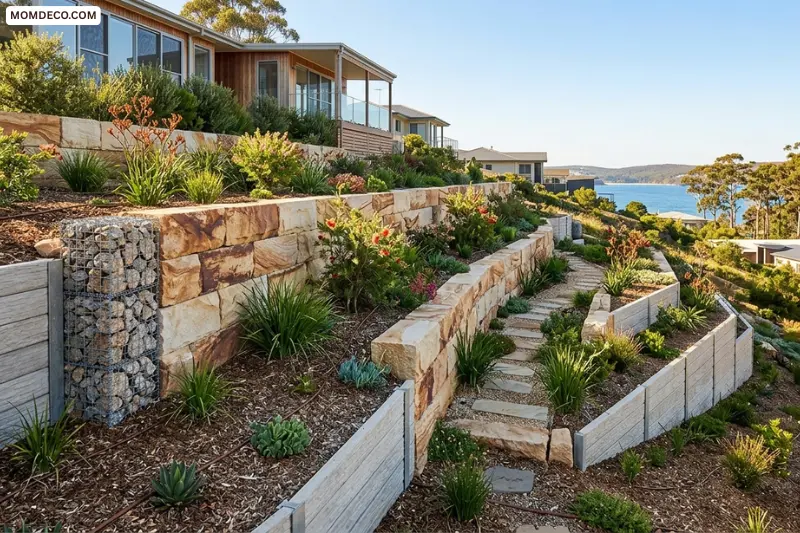
Retaining walls are the backbone of any steep sloped front yard. They hold soil in place, prevent erosion, and create flat planting terraces you can actually use.
Best materials for Australian conditions:
- Sandstone blocks — beautiful, natural look, suits federation and heritage homes
- Concrete sleepers — strong, long-lasting, great for modern homes
- Timber sleepers — affordable, but need treatment for longevity in wet climates
- Gabion walls — wire cages filled with rocks; rustic, excellent drainage, and very durable
Pro tip: Always install agricultural drainage pipe (ag pipe) behind retaining walls. Without it, water pressure builds up behind the wall and causes it to fail — a costly mistake many homeowners make.
2. Create Natural Stone Steps
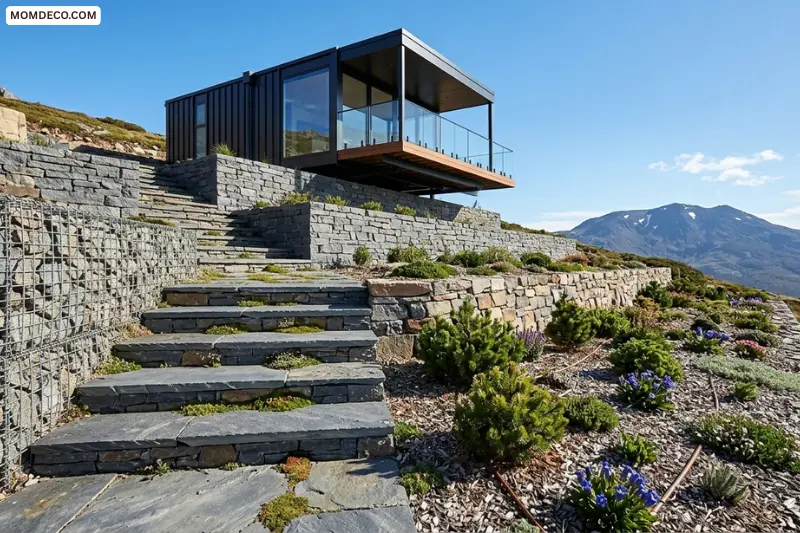
Steps are a must on any sloped front yard, but they don’t have to be boring. Natural stone steps — using sandstone, granite, or bluestone — blend seamlessly into the landscape and get better-looking with age.
Design tips:
- Make each step at least 300mm deep (tread) and no more than 180mm high (rise) for comfortable walking
- Slightly angle each step forward so rainwater runs off
- Add small native groundcovers between steps for a natural, established look
3. Use Cascading Native Groundcovers for Erosion Control
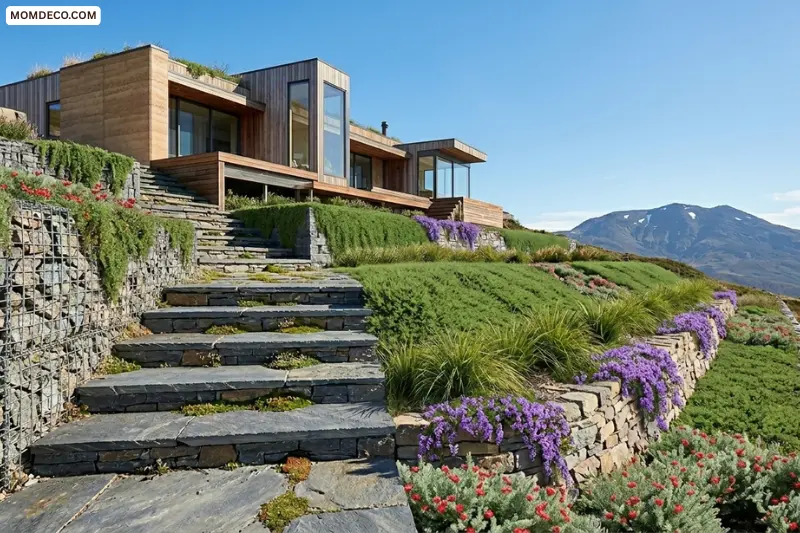
This is one of the most underused sloped front yard ideas Australia has to offer. Instead of mulching and hoping for the best, plant dense groundcovers that anchor the soil with their root systems.
Top picks for Australian slopes:
- Myoporum parvifolium (creeping boobialla) — fast-spreading, drought-hardy, handles full sun
- Grevillea lanigera (woolly grevillea) — low-growing, attracts honeyeaters, beautiful red flowers
- Hardenbergia violacea — purple flowering climber that drapes beautifully over walls
- Lomandra longifolia — tough grass-like plant, handles slopes, erosion, and neglect
Plant in staggered rows across the slope, not in straight lines, to slow water runoff and maximise coverage.
4. Install a Curved Pathway
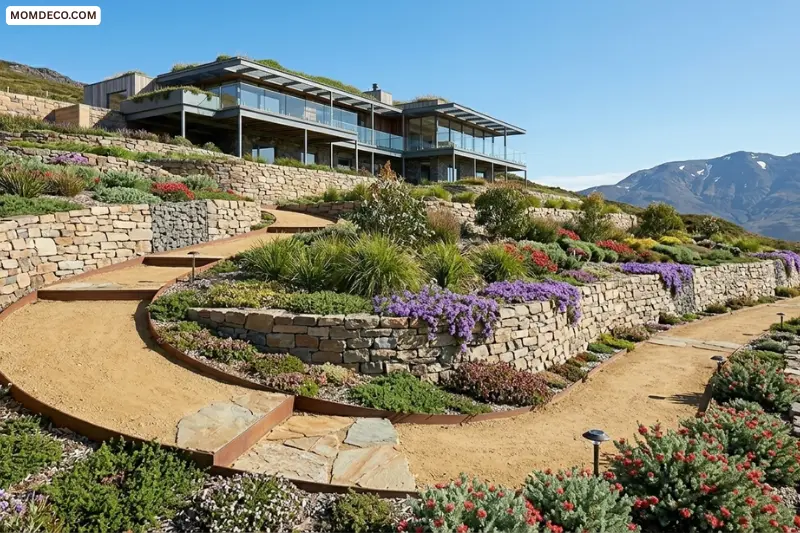
A straight path up a slope feels like a workout. A curved or meandering path feels like an invitation. Curves slow the visual pace, make the garden feel larger, and reduce the steepness you feel underfoot.
Material options:
- Decomposed granite (DG) — affordable, natural, permeable
- Sandstone pavers — classic Australian look
- Exposed aggregate concrete — durable, low maintenance, suits modern homes
- Recycled brick — character-filled, great for cottage-style gardens
5. Add a Dry Creek Bed for Drainage
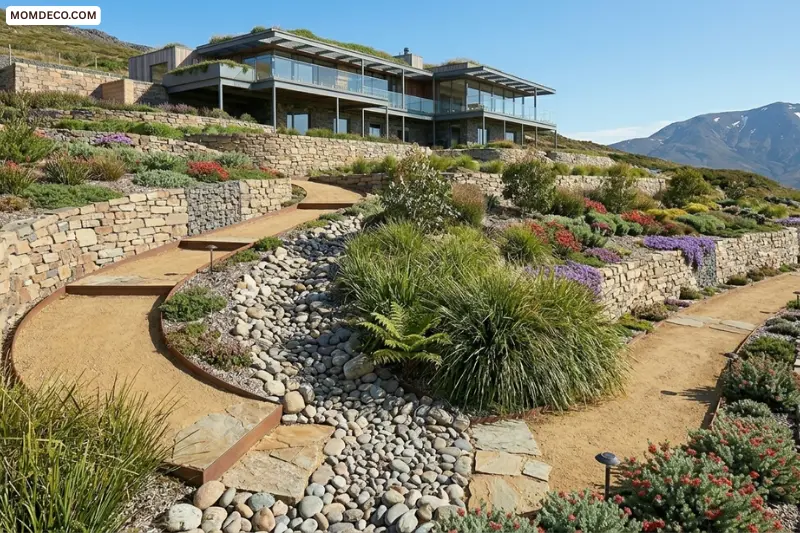
This is a feature your competitors rarely mention — and it’s a game changer for sloped front yards in high rainfall areas like Sydney, Brisbane, and Melbourne.
A dry creek bed is a shallow, rock-lined channel that directs stormwater down the slope in a controlled way. It looks like a natural stream bed and solves a real drainage problem at the same time.
How to build one:
- Excavate a shallow channel (about 200–300mm deep) following the natural water flow path
- Line with geotextile fabric to prevent soil mixing
- Fill with river pebbles, smooth cobblestones, or decorative rock
- Plant ornamental grasses and small shrubs along the edges
This feature alone can prevent thousands of dollars in water damage to your home’s foundations.
6. Try a Rock Garden (Rockery)
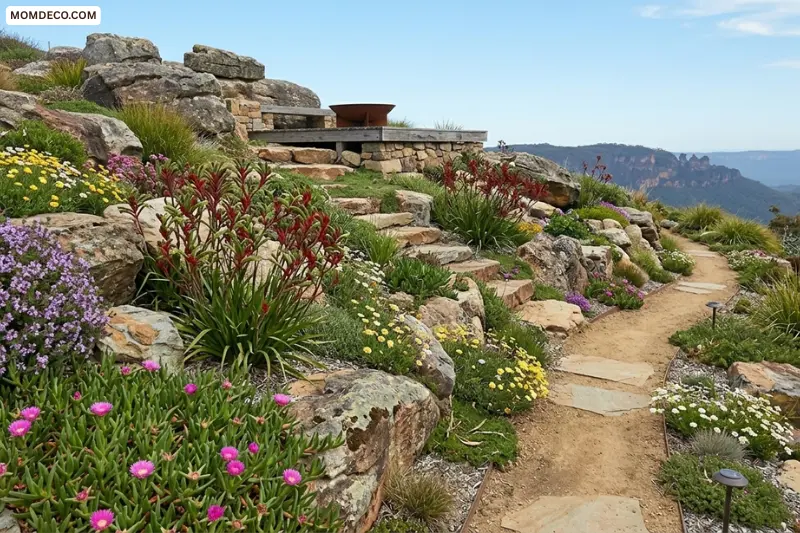
Rock gardens are perfectly suited to sloped front yards in Australia. They celebrate the natural ruggedness of the terrain, require almost no maintenance, and look fantastic year-round.
Place large feature rocks first, half-buried into the slope for a natural look. Fill gaps with well-draining, sandy soil and plant drought-tolerant specimens like:
- Kangaroo Paw (Anigozanthos)
- Pigface (Carpobrotus glaucescens)
- Purple Haze Westringia
- Native daisies (Brachyscome)
7. Introduce a Feature Garden Bed on Each Terrace
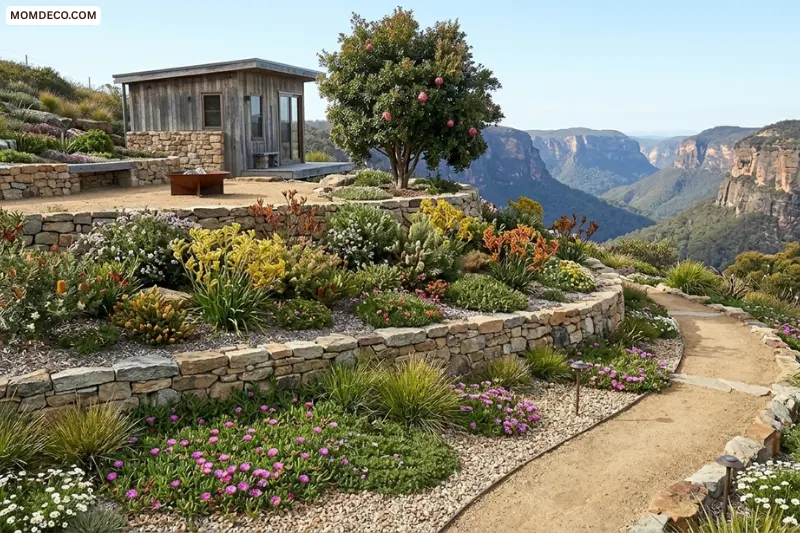
Once you have retaining walls in place, each flat terrace becomes its own garden canvas. Rather than planting everything the same, give each terrace a purpose:
- Top terrace: Feature tree or large shrub as a focal point (try a Lilly Pilly or Blueberry Ash)
- Middle terrace: Mixed flowering natives and low shrubs
- Bottom terrace: Groundcovers and decorative gravel mulch that buffers the footpath
8. Install Slope-Friendly Turf or No-Mow Lawn
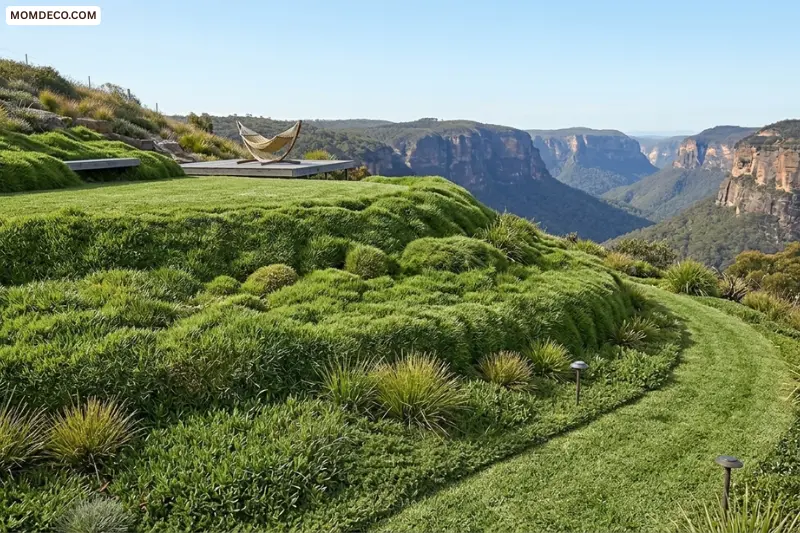
Many homeowners assume you can’t have lawn on a slope. You can — you just need to choose the right type.
Best lawn options for Sloped Front Yard Ideas Australia:
- Zoysia grass — dense, slow-growing, holds slopes well, handles drought
- Couch grass — tough, spreads quickly, good erosion control
- Buffalo grass — shade-tolerant, soft underfoot, popular across NSW, QLD, and VIC
For steeper slopes (over 20%), consider a no-mow alternative like native sedges or a low-growing groundcover. Mowing a very steep slope is genuinely dangerous and unnecessary.
9. Use Mulch Strategically
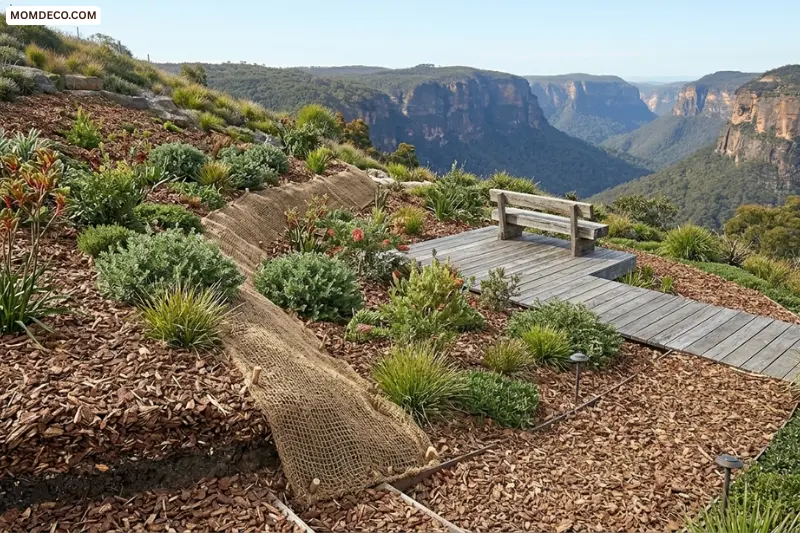
Mulch is your best friend on Sloped Front Yard Ideas Australia — but apply it correctly or it washes away in the first heavy rain.
Tips for mulching slopes:
- Use chunky, coarse mulch (wood chip or bark) — fine mulch floats away
- Apply 75–100mm thick across all garden beds
- Use jute mesh or erosion control matting over mulch on very steep sections to hold it in place until plants establish
- Reapply every 12–18 months
10. Add Lighting for Safety and Ambience
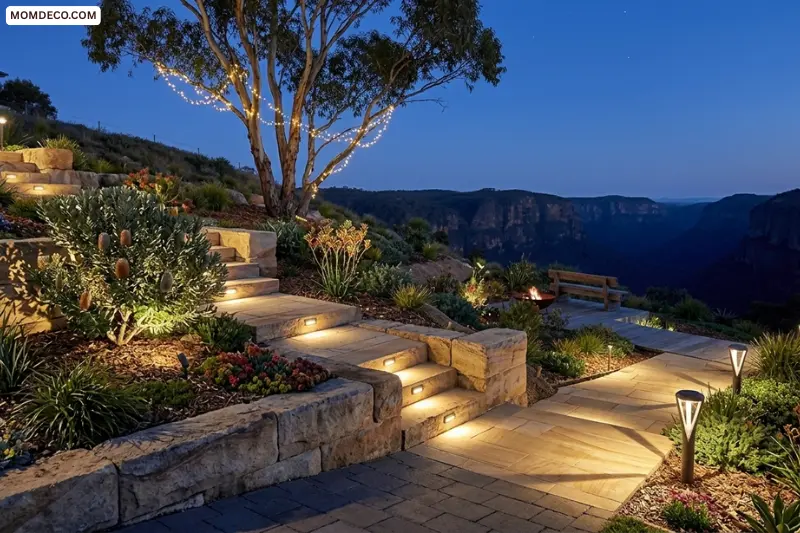
Sloped front yards need good lighting — both for safety and kerb appeal at night. Consider:
- In-ground step lights along pathways and stairs
- Spotlights directed up at feature plants or walls
- Solar bollard lights along the path edges — no electrician needed
- Fairy lights threaded through feature trees for evening charm
Lighting transforms a sloped front yard after dark and makes your home feel welcoming around the clock.
Cost Guide: What to Budget for Sloped Front Yard Landscaping in Australia
This is something almost none of your competitors provide — actual numbers.
| Project | Estimated Cost (AUD) |
|---|---|
| Basic retaining wall (per lineal metre) | $250 – $650 |
| Natural stone steps (per step) | $150 – $400 |
| Turf installation (per m²) | $25 – $50 |
| Dry creek bed (small front yard) | $800 – $2,500 |
| Garden lighting (solar, basic) | $200 – $800 |
| Full front yard landscape redesign | $8,000 – $30,000+ |
DIY can cut costs significantly, especially for planting, mulching, and small rockeries. Always get at least three quotes from local landscapers before committing to major earthworks.
Soil and Drainage Tips Most Articles Skip
Most Sloped Front Yard Ideas Australia guides focus on aesthetics and skip the engineering basics. Here’s what actually matters underground:
- Install subsoil drainage on any slope before planting — a simple slotted ag pipe running along the base of retaining walls prevents waterlogging
- Amend clay soils with gypsum and organic compost before planting to improve drainage
- Use permeable paving wherever possible — gravel, decomposed granite, or permeable concrete allows rain to soak in rather than run off
- Grade all hard surfaces slightly away from your home’s foundation — even a 2% fall is enough
Best Australian Native Plants for Sloped Front Yards (Quick Reference)
| Plant | Height | Benefits | Climate Suitability |
|---|---|---|---|
| Myoporum parvifolium | 0.2m | Erosion control, groundcover | All states |
| Lomandra longifolia | 0.6m | Tough, low care | All states |
| Grevillea lanigera | 0.5–1m | Bird-attracting, flowers | VIC, NSW, SA |
| Kangaroo Paw | 0.5–1.5m | Bold colour, drought hardy | WA, SA, NSW |
| Westringia fruticosa | 1–2m | Hedge, coastal hardy | All coastal areas |
| Lilly Pilly | 2–5m | Privacy hedge, bird food | QLD, NSW, VIC |
| Brachyscome | 0.3m | Daisy flowers, rockery | All states |
DIY vs. Professional: When to Call a Landscaper
You can DIY many Sloped Front Yard Ideas Australia projects — planting, mulching, small rockeries, and solar lighting are all beginner-friendly. But call a professional for:
- Any retaining wall over 600mm in height (often legally required)
- Earthworks and significant grading
- Drainage engineering on steep slopes
- Anything near your home’s footings or sewer lines
A good landscape designer can also help you avoid costly mistakes before you start digging.
Frequently Asked Questions
Q1. What is the cheapest way to landscape a Sloped Front Yard Ideas Australia?
The most budget-friendly approach is groundcover planting combined with mulch and a simple stone edge. Native groundcovers like Myoporum parvifolium cost as little as $5–$10 per pot and spread quickly. Add jute mesh for erosion control and chunky bark mulch, and you have an effective, attractive slope for under $1,000 in most cases.
Q2. Do I need council approval for a retaining wall in my front yard?
In most Australian councils, retaining walls under 600mm height don’t require a permit — but this varies by state and local council. In NSW, QLD, and VIC, anything over 600mm typically needs a building permit and may require an engineer’s certification. Always check with your local council before starting construction.
Q3. What plants stop soil erosion on a Sloped Front Yard Ideas Australia?
The best erosion-control plants for Australian slopes are deep-rooted natives like Lomandra longifolia, Myoporum parvifolium, Grevillea lanigera, and native grasses. Their root systems bind soil together and significantly reduce runoff during heavy rain.
Q4. Can I have lawn on a Sloped Front Yard Ideas Australia?
Yes — but choose the right variety. Zoysia, couch, and buffalo grass all hold slopes well. For slopes steeper than 20%, consider native groundcovers instead of lawn for safety when mowing and better erosion control.
Q5. How do I stop mulch washing off a slope?
Use coarse, chunky mulch (bark chip or wood mulch) rather than fine mulch. Apply it 75–100mm thick and cover it with jute mesh or erosion matting on very steep sections. Plant densely so root systems and foliage hold the mulch in place over time.
Q6. What is the best retaining wall material for a Sloped Front Yard Ideas Australia?
Concrete sleepers are the most durable and low-maintenance option. Sandstone blocks suit heritage homes beautifully. Gabion walls are excellent for drainage and modern or rural aesthetics. Timber sleepers are the most affordable but require regular maintenance and may rot in wet climates.
Q7. How do I improve drainage on a sloped front yard?
Install agricultural drainage pipe (ag pipe) at the base of retaining walls. Use permeable paving on pathways and driveways. Amend clay soils with gypsum and compost. Consider a dry creek bed feature to channel stormwater away from the house in a decorative way.
Q8. How much does it cost to landscape a sloped front yard in Australia?
Costs vary widely. A basic DIY native planting and mulching project can cost $500–$2,000. A professionally landscaped sloped yard with retaining walls, steps, and planting typically ranges from $8,000 to $30,000+, depending on the slope’s severity, materials, and your location in Australia.
Q9. What are the best low-maintenance sloped front yard ideas for Australia?
The best low-maintenance options include native groundcover planting, rock gardens with drought-tolerant natives, gabion retaining walls (no painting or sealing needed), and solar garden lighting. Once established, native plants in particular need minimal watering, fertilising, or pruning.
Q10. How long does it take for a sloped front yard to establish after landscaping?
Most planted slopes look reasonably established within 6–12 months, especially if planted in autumn or early spring. Full canopy coverage and erosion control is typically achieved within 18–24 months for groundcovers and shrubs. Patience pays off — a well-planted slope gets better every year.
Final Thoughts
A sloped front yard is not a problem to fix — it is an opportunity to create something truly memorable. While flat yards blend into the street, a well-designed slope commands attention, adds dimension, and tells a story the moment someone pulls up outside your home. The secret is simple: start with the basics. Get your drainage right, choose the correct retaining solution for your slope’s grade, and then let the creative ideas follow. Whether you go bold with tiered sandstone walls and a cascading water feature, or keep it beautifully simple with native groundcovers and a curved stone path — every choice you make works with the land rather than against it.
Australian landscapes are tough, beautiful, and full of character. Your front yard should be too.
You do not need to tackle everything at once. Start with one section, get it right, and build from there. Even small improvements — a new pathway, a few native plants, a layer of chunky mulch — make an immediate difference to how your home looks and feels from the street.
Most importantly, remember that the best sloped front yard ideas are the ones that suit your home, your climate, your budget, and your lifestyle. There is no single right answer — only the one that works for you.
So grab a notepad, walk outside, and take a good look at your slope. Chances are, it has more potential than you ever gave it credit for.