Your kitchen is the heart of your home. It’s where you brew your morning coffee, cook Sunday dinners, and gather with the people you love most. So when it stops working for you — whether the layout is cramped, the cabinets are dated, or the countertops have seen better days — it’s time to call in a kitchen remodeler and make it a space you truly enjoy.
This guide covers everything you need to know: layouts, styles, storage, materials, costs, and the smart questions to ask before your remodel begins.
Why Kitchen Remodeling Is Worth Every Penny
A kitchen remodel is one of the highest-return home improvement investments you can make. According to industry data, a mid-range kitchen remodel can recoup 60–80% of its cost at resale — and a minor kitchen update recoup even more.
Beyond money, the benefits are personal. A thoughtfully remodeled kitchen improves daily life in ways you feel immediately: more counter space, better lighting, smarter storage, and a layout that actually makes cooking enjoyable.
Step 1: Choose the Right Kitchen Layout
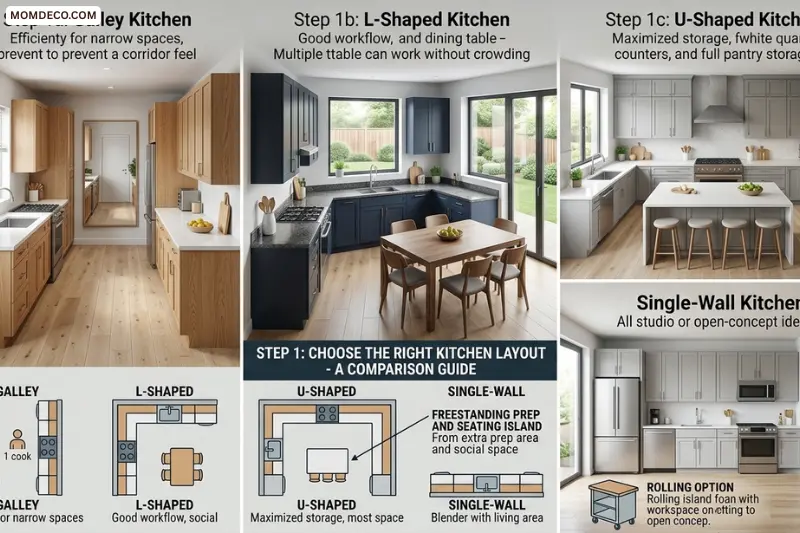
Before you hire a kitchen remodeler, understand which layout fits your space and lifestyle. The layout affects everything — workflow, storage, and how many people can comfortably be in the kitchen at once.
- Galley Kitchen Two parallel counters with a walkway in between. Ideal for small or narrow spaces. Highly efficient for cooking because everything stays within arm’s reach. Add mirrors or light colors to prevent it from feeling like a corridor.
- L-Shaped Kitchen Counters along two adjacent walls, creating an open corner. Great for medium-sized kitchens. Pairs well with a dining table or island in the open space. Allows multiple people to work without crowding.
- U-Shaped Kitchen Counters along three walls, maximizing storage and workspace. Best for larger kitchens. Offers the most cabinet and counter space of any layout. Works beautifully with a center island for extra prep area.
- Single-Wall Kitchen All appliances and cabinets along one wall. Perfect for studio apartments or open-concept spaces where you want the kitchen to blend with the living area.
- Island Kitchen Adds a freestanding prep and seating surface to any of the layouts above. A rolling island works well in smaller kitchens — you get the workspace when you need it and the floor space when you don’t.
The Work Triangle Rule: Still Relevant in 2026
A good kitchen remodeler will always design around the work triangle — the invisible line connecting your sink, stove, and refrigerator. Keep each leg between 4 and 9 feet, and the total triangle between 13 and 26 feet. This reduces unnecessary steps and makes cooking faster and less tiring.
Step 2: Pick Your Kitchen Design Style
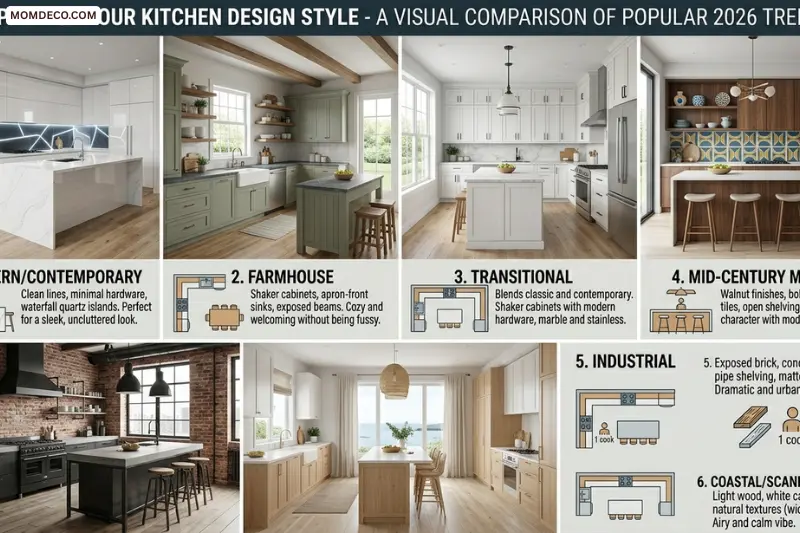
Your kitchen should look like you. Here are the most popular styles homeowners choose in 2026:
- Modern/Contemporary Clean lines, flat-panel cabinets, minimal hardware, and high-gloss finishes. Think waterfall quartz islands, integrated appliances, and bold backsplashes. Perfect if you love a sleek, uncluttered look.
- Farmhouse Shaker cabinets, apron-front sinks, exposed beams, and warm wood tones. This style feels cozy and welcoming without being fussy.
- Transitional The most popular choice right now. Transitional kitchens blend classic and contemporary — think shaker cabinets with modern hardware, or marble countertops with stainless appliances.
- Mid-Century Modern Walnut finishes, bold backsplash tiles, open shelving, and clean geometric shapes. A great choice if you love vintage character with modern function.
- Industrial Exposed brick, concrete countertops, open pipe shelving, and matte black fixtures. Dramatic and urban in feeling.
- Coastal/Scandinavian Light wood, white cabinetry, natural textures like wicker and linen. Airy and calm — perfect for homes near the water or anyone who wants a relaxing kitchen vibe.
Step 3: Maximize Your Kitchen Storage
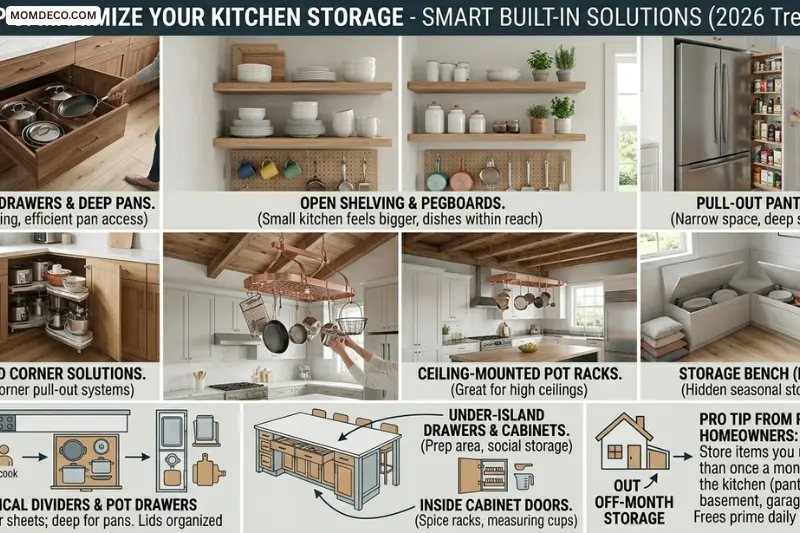
One of the top complaints homeowners have before a remodel is not enough storage. A skilled kitchen remodeler solves this problem with smart, built-in solutions — not just more cabinets.
Cabinet Storage Upgrades
- Pull-out drawers inside lower cabinets (no more crouching to find the pan you need)
- Lazy Susans or corner pull-outs for awkward corner cabinets
- Vertical dividers for baking sheets and cutting boards
- Deep drawers for pots, pans, and lids
Wall and Ceiling Storage
- Open shelving to replace upper cabinets — makes small kitchens feel bigger and keeps dishes within reach
- Floating shelves for displaying everyday dishes, jars, and herbs
- Pegboards for hanging utensils, mugs, and small tools
- Ceiling-mounted pot racks for homes with high ceilings
Hidden and Bonus Storage
- Pull-out pantry between the refrigerator and wall
- Storage bench in a breakfast nook
- Under-island drawers and cabinets
- The inside of cabinet doors (great for spice racks and measuring cups)
Pro Tip from Real Homeowners: Store items you use less than once a month outside the kitchen — in a pantry closet, basement, or garage. It frees up prime kitchen real estate for the tools you use daily.
Step 4: Choose Materials That Last
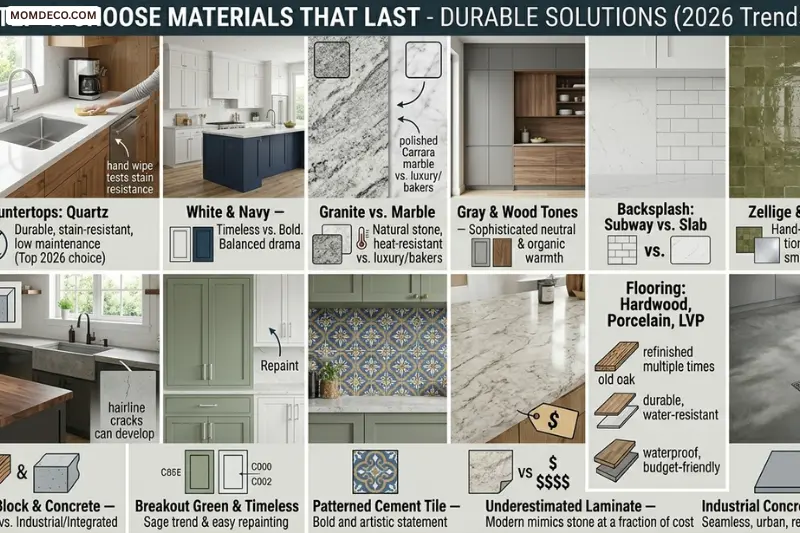
Your kitchen remodeler will guide you through hundreds of material choices. Here’s what you actually need to know:
Countertops
- Quartz — The top choice in 2026. Non-porous, stain-resistant, low maintenance, and available in nearly every color and pattern. More durable than marble.
- Granite — Natural stone with unique veining in every slab. Requires annual sealing but is highly heat-resistant and timeless.
- Marble — Luxurious and beautiful, but requires more maintenance. Best for bakers who love the cool surface for pastry work.
- Butcher Block — Warm, natural, and budget-friendly. Needs oiling periodically. Works beautifully as an island top alongside stone perimeter counters.
- Concrete — Industrial and custom. Can be poured to any shape, including integrated sinks. Requires sealing and can develop hairline cracks over time.
- Laminate — Often underestimated. Modern laminate mimics stone beautifully at a fraction of the cost. A great choice for budget-conscious remodels.
Cabinet Finishes
- White cabinets — Timeless, bright, and versatile. Show wear more easily but are easy to repaint.
- Gray cabinets — The sophisticated neutral. Pairs with almost everything.
- Navy and dark blue — Bold and dramatic. Works best when balanced with light countertops and floors.
- Green (sage, forest, olive) — The breakout trend of the last few years, still going strong.
- Natural wood tones — Warm and organic. Pairs beautifully with white or stone countertops.
Backsplash Options
- Subway tile — A classic that never goes out of style
- Marble or quartz slab — Seamless and dramatic
- Zellige tile — Handmade Moroccan clay tile with beautiful variation and texture
- Patterned cement tile — Bold and artistic
- Glass tile — Reflective and great for small kitchens
Flooring
- Hardwood — Warm and classic. Can be refinished multiple times.
- Porcelain tile — Durable, water-resistant, and available in wood-look options.
- Luxury vinyl plank (LVP) — Waterproof, comfortable underfoot, and budget-friendly.
- Concrete — Industrial and seamless. Requires sealing.
Step 5: Lighting That Actually Works
Most kitchens are under-lit, and no kitchen remodeler should let that happen to you. Good kitchen lighting has three layers:
- Ambient Lighting The general overhead light that fills the room. Recessed lights or a central fixture provide this.
- Task Lighting Focused light directly where you work. Under-cabinet LED strips over the counter are the most effective and affordable upgrade you can make. Add them above prep zones, the sink, and the stove.
- Accent Lighting Decorative lighting that adds personality. Pendant lights over an island, cabinet lighting to display dishes, or toe-kick lighting for a warm, modern glow.
- Don’t forget: If your kitchen has a window, maximize natural light. Use lighter paint colors and reflective surfaces (glossy cabinets, light countertops) to bounce daylight deeper into the space.
Step 6: Smart Kitchen Features Worth Adding in 2026
What competitors rarely tell you is that the best kitchen remodels now include smart technology — and it doesn’t have to be expensive.
- Motion-sensor faucets — Turn on with a touch or wave. A game-changer when your hands are covered in flour or raw chicken.
- Built-in USB charging stations — Integrated into outlets or drawers. Keeps devices charged without cluttering the counter.
- Smart under-cabinet lighting — Adjust brightness and color temperature from your phone.
- Soft-close hinges and drawer glides — Not a “smart” technology, but the single most satisfying upgrade in any kitchen remodel. No more slamming.
- Hidden charging drawers — A dedicated drawer with a built-in wireless pad for phones and earbuds.
- Ventilation with auto-sensing — Range hoods that automatically adjust fan speed based on heat and smoke levels.
Step 7: Real Remodel Costs (What to Actually Budget)
This is the information most competitor sites avoid giving you clearly. Here’s a realistic breakdown:
- Minor Kitchen Remodel (cosmetic updates) $10,000 – $25,000 Includes: new cabinet fronts, countertop replacement, new appliances, backsplash, paint, fixtures
- Mid-Range Kitchen Remodel (partial renovation) $25,000 – $60,000 Includes: semi-custom cabinets, new countertops, flooring, lighting, appliances, layout adjustments
- Full Kitchen Remodel (gut renovation) $60,000 – $150,000+ Includes: custom cabinetry, premium materials, layout changes, structural work, new plumbing and electrical
Where the money goes:
- Cabinets: 30–40% of the total budget
- Labor: 20–35%
- Appliances: 15–20%
- Countertops: 10–15%
- Flooring, lighting, and plumbing: remainder
Cost-saving tips:
- Keep plumbing in the same location (moving pipes significantly increases costs)
- Reface cabinets instead of replacing them if the boxes are in good shape
- Choose quartz over marble for similar looks at lower cost and maintenance
- Buy appliances as a bundled suite for package discounts
Step 8: How to Choose the Right Kitchen Remodeler
Not all kitchen remodelers are equal. Here’s how to find one you can trust:
- Check licenses and insurance. Your remodeler must be licensed in your state and carry liability and workers’ comp insurance.
- Ask for a portfolio. You want to see kitchens they have actually built — not stock photos.
- Read reviews on multiple platforms — Google, Houzz, and the Better Business Bureau.
- Get three written quotes. Compare line by line, not just total cost.
- Ask who does the work. Some contractors sub out everything. Know who will be in your home.
- Get a detailed contract. It should specify scope, timeline, payment schedule, and what happens if costs go over.
Red flags to watch for:
- Requests for full payment upfront
- No written contract
- Dramatically lower price than competitors (often means cut corners or unlicensed work)
- No physical business address
Small Kitchen? These Remodeling Ideas Are for You
If you’re working with a compact space, a good kitchen remodeler will use these strategies:
- Replace upper cabinets with open shelving to open up the room visually
- Use light colors on walls, cabinets, and floors to create a sense of space
- Add a fold-down table for dining that tucks away when not in use
- Install a rolling island for flexible prep space
- Use high-gloss cabinet finishes to reflect light and add depth
- Run flooring diagonally to make the room appear wider
- Add under-cabinet lighting to eliminate shadows and dark corners
- Choose a single-bowl sink to maximize counter space
- Use vertical space — stack cabinets to the ceiling with a step stool nearby
The Remodel Timeline: What to Expect
Planning and Design: 2–6 weeks Permitting (if required): 2–8 weeks depending on your city Demo and Rough Work: 1–2 weeks Cabinetry Installation: 1–2 weeks Countertop Fabrication and Install: 1–2 weeks after cabinets Flooring, Backsplash, Fixtures: 1–2 weeks Appliance Installation: 1–3 days Final Touches and Punch List: 1 week
Total average time: 6–16 weeks for a full kitchen remodel
Plan to live without your kitchen for a significant portion of this time. Set up a temporary cooking station in another room — a microwave, toaster oven, and electric kettle go a long way.
Frequently Asked Questions (FAQs)
1. How much does it cost to hire a kitchen remodeler?
Kitchen remodeler costs vary widely depending on scope, materials, and location. A cosmetic refresh starts around $10,000, while a full gut renovation can run $60,000–$150,000 or more. Always get multiple quotes and ask for an itemized breakdown.
2. How long does a kitchen remodel take?
A full kitchen remodel typically takes 6 to 16 weeks from demo to completion. Smaller updates can be done in 2–4 weeks. The biggest delays usually come from custom cabinet lead times (4–12 weeks) and permit approval.
3. Do I need a permit for a kitchen remodel?
Most kitchen remodels that involve moving plumbing, electrical, or walls require permits. A licensed kitchen remodeler will handle permit applications for you. Skipping permits can cause problems when you sell your home.
4. What should I splurge on and what can I save on?
Splurge on: cabinets (they define the look and get daily use), countertops (they take the most abuse), and lighting (it changes everything). Save on: appliances (mid-range brands perform as well as luxury ones), hardware (easy to swap later), and backsplash tile (great affordable options exist at every price point).
5. What is the first thing a kitchen remodeler does?
After signing a contract, the remodeler will typically pull permits, order cabinetry (which has the longest lead time), and schedule demo. Demo is usually the first physical work — clearing out the old kitchen before new work begins.
6. Should I move out during a kitchen remodel?
You don’t have to, but you should prepare. You will not have a functioning kitchen for several weeks. Set up a temporary cooking station, stock up on easy meals, and expect dust throughout your home. Many homeowners choose to stay — just plan ahead.
7. What adds the most value in a kitchen remodel?
Updated cabinets and countertops deliver the biggest visual and value impact. Adding an island (if space allows), improving lighting, and upgrading to energy-efficient appliances also add significant value at resale.
8. Can I remodel a small kitchen on a tight budget?
Yes. A kitchen remodeler can achieve dramatic results by painting or refacing cabinets, replacing hardware, installing a new backsplash, upgrading lighting, and adding a new countertop — often for under $15,000. The layout stays the same, but the kitchen looks and functions completely differently.
9. What is the most popular kitchen style right now?
Transitional kitchens — blending traditional shaker cabinets with modern hardware and materials — are the most popular style in 2026. Sage green and navy cabinetry are trending strongly, along with warm wood tones, unlacquered brass hardware, and quartz countertops.
10. How do I find a trustworthy kitchen remodeler near me?
Start with referrals from neighbors or friends who have recently remodeled. Check Houzz, Google Reviews, and the Better Business Bureau. Verify licensing with your state contractor board. Always meet in person, review their portfolio, and get at least three written bids before making a decision.
Final Thoughts
A kitchen remodel is one of the most personal and impactful projects you can do for your home. It changes how you cook, how you entertain, and how you feel every single day you walk into that room. The key is planning well, choosing a skilled kitchen remodeler you trust, and making decisions based on how you actually live — not just what looks beautiful in photos.
Start with your layout. Build in smart storage. Choose durable materials you love. Layer your lighting. And hire a remodeler who listens.
Your dream kitchen is closer than you think.