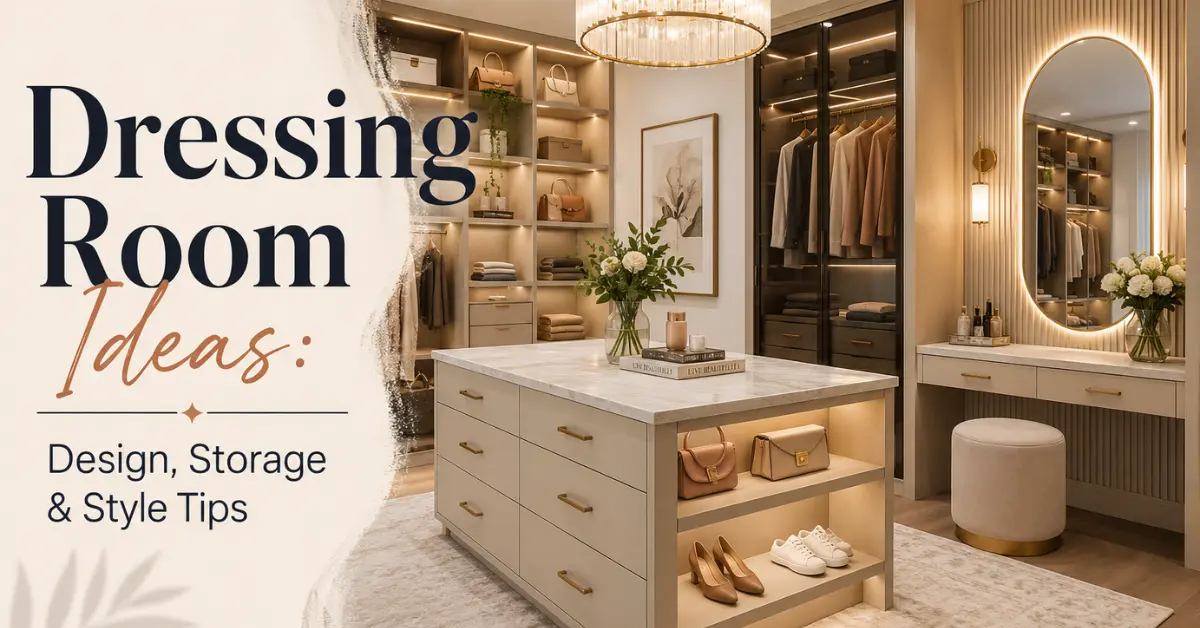
A dressing room is one of the most rewarding spaces you can create in your home. It gives you a dedicated place to get ready, stay organised, and start each day with calm instead of chaos. Whether you have a full spare room, a bedroom alcove, or just a generous corner, you can build a dressing room that works for your lifestyle and your space.
This guide covers everything — from layout planning and storage solutions to lighting, colour, and the details that elevate a functional space into something truly beautiful.
What Is a Dressing Room, and Do You Really Need One?
A dressing room is a dedicated space for storing and organising clothes, shoes, and accessories, and for getting dressed. It can be as grand as a walk-in wardrobe or as simple as a curtained alcove with a rail and a mirror.
You do not need a large home to create one. What you need is a clear plan and the right storage choices.
A dressing room benefits you if:
- You share a bedroom and need separate storage
- You find yourself constantly searching for outfits in the morning
- Your bedroom feels cluttered with clothes and accessories
- You want a calming, hotel-like routine at home
- You work in a profession where your wardrobe matters
How to Plan Your Dressing Room Layout
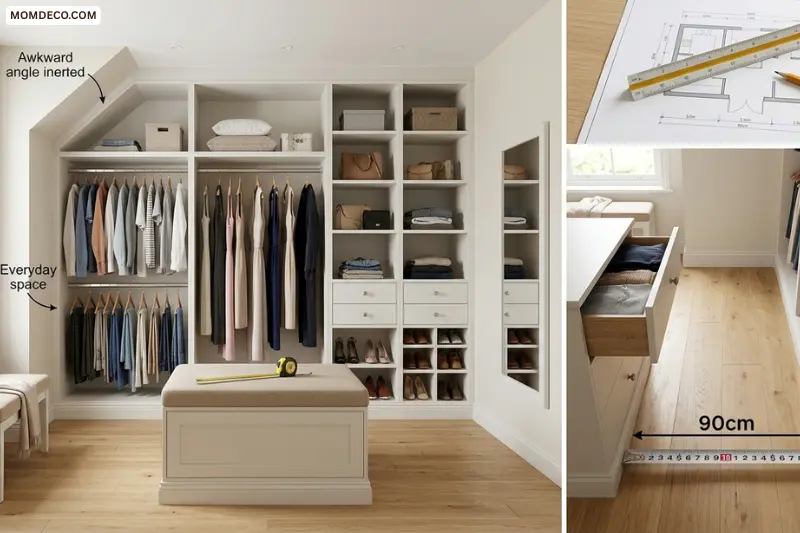
Planning the layout is the single most important step. Get this right, and everything else falls into place.
Measure First, Design Second
Before you look at any inspiration images, measure your available space carefully. Note the ceiling height, door swing direction, window placement, and any awkward angles. These measurements will shape every decision you make.
Common Dressing Room Layouts
Linear (Single-Wall) Layout Best for narrow rooms and converted hallways. All storage runs along one wall. Simple, affordable, and surprisingly effective for smaller wardrobes.
L-Shaped Layout Uses two adjoining walls. Gives you more hanging space and lets you separate clothing categories — for example, everyday wear on one side and formal wear on the other.
U-Shaped Layout The most efficient use of floor space. Storage wraps around three walls, and you stand in the centre. Ideal for dedicated rooms between 2m x 2m and up, especially walk-in dressing rooms.
Island Layout Adds a central storage unit or bench in the middle of a large dressing room. Creates a boutique feel and provides extra drawer or display space.
The Golden Rule of Dressing Room Planning
Always leave at least 90cm of clear floor space in front of any hanging rail or shelving. This gives you comfortable room to move, open drawers, and step back to assess an outfit. Going below this makes the room feel cramped and frustrating to use.
Dressing Room Ideas for Small Spaces
A small dressing room is absolutely achievable. The secret is using every centimetre intentionally.
Convert a Bedroom Alcove
Alcoves beside chimney breasts are perfect dressing room spots. Fit a hanging rail, a few shelves above, and finish with a full-length mirror on the facing wall. Add a curtain instead of a door to save space on the swing.
Use the Space Behind Your Bed
A slim open wardrobe system behind the headboard creates a room divider and a functional dressing area in one move. It works especially well in studio flats and open-plan spaces.
Go Vertical
In a small dressing room, the floor area is limited — so think upward. Install shelving right up to the ceiling. Use the highest shelves for seasonal items and items you rarely need. A small step stool makes high shelves practical.
Choose Sliding or Pocket Doors
Hinged doors eat into your usable floor space. Sliding doors, bi-fold doors, or pocket doors that disappear into the wall keep every centimetre accessible.
Use Mirrors Strategically
A full-length mirror on a wall or the back of a door makes a small dressing room feel twice as large. Mirrored wardrobe fronts do the same while hiding clutter.
Quick wins for small dressing rooms:
- Slim velvet hangers instead of bulky plastic ones — they save up to 30% more rail space
- Over-door organisers for shoes, scarves, and belts
- Drawer dividers to keep accessories tidy without extra furniture
- Transparent storage boxes so you can see contents without opening everything
- Fold-away or wall-mounted seating rather than a freestanding stool
Walk-In Dressing Room Ideas
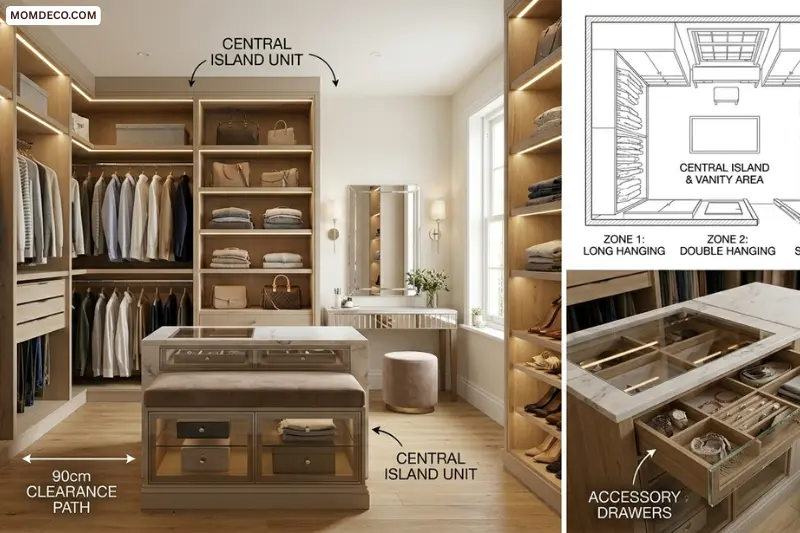
A walk-in dressing room is the dream for many homeowners, and if you have the space — even a modest spare room — it is more achievable than people think.
Design It Like a Boutique
The best walk-in dressing rooms borrow visual language from high-end fashion boutiques. Open shelving, clean lines, warm lighting, and a central island or bench create a space that feels curated rather than just storage-heavy.
Separate Your Wardrobe by Zone
Divide your walk-in dressing room into clear zones:
- Long hanging — full-length dresses, suits, coats
- Double hanging — shirts, jackets, folded trousers
- Shelves — folded knitwear, jeans, bags
- Drawers — underwear, socks, accessories
- Shoe storage — open shelves, angled shoe racks, or pull-out drawers
Grouping by category makes getting dressed faster and keeps the room tidier day to day.
Add a Dressing Table or Vanity
A dedicated dressing table transforms a walk-in dressing room into a genuine getting-ready sanctuary. Position it under a window for natural light, or frame it with wall-mounted lights on either side of the mirror for even, flattering illumination.
Consider an Island Unit
A central island with drawers is one of the most useful additions to a larger dressing room. Use it for folded items, jewellery, accessories, or as a surface for laying out outfits. Some islands include a padded top, creating a convenient seat.
Dressing Room Storage Ideas
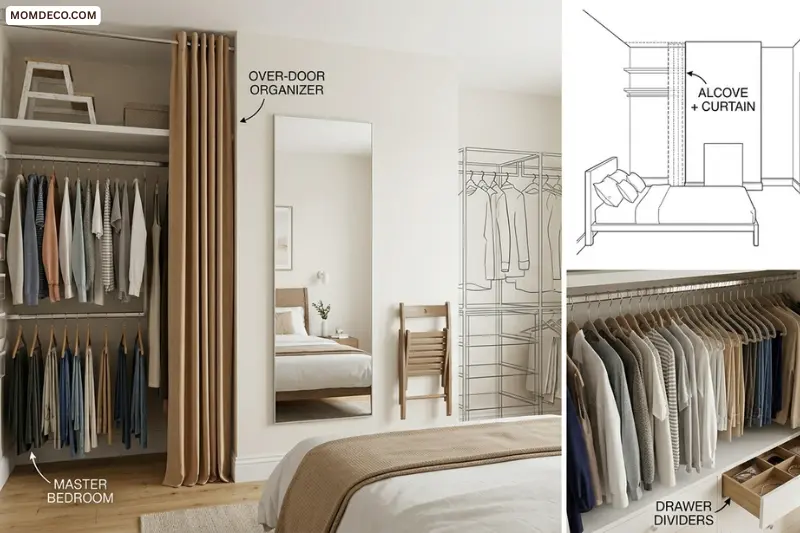
Smart storage is the backbone of any successful dressing room. Here is how to think through each category.
Hanging Storage
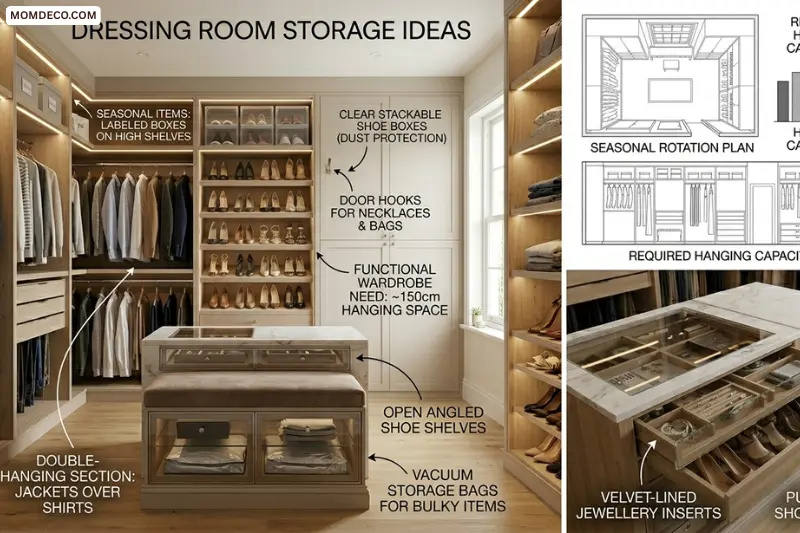
Most people need more hanging space than they think. A standard wardrobe provides around 90–100cm of hanging rail. The average person needs at least 150cm for a functional wardrobe — more if you own a significant number of formal or occasion pieces.
Use double-hanging sections wherever you store shorter items. A jacket over a shelf of folded shirts uses half the vertical space of a single long rail.
Shoe Storage
Shoes are often the trickiest category to store well. Open angled shelves let you see everything at a glance. Pull-out shoe drawers work brilliantly in fitted systems. Clear stackable boxes are a budget-friendly alternative that also protects shoes from dust.
Consider storing out-of-season shoes in labelled boxes on higher shelves and keeping current-season footwear at eye level.
Jewellery and Accessories
Drawers fitted with velvet-lined inserts are the most elegant solution for jewellery. Hooks on the inside of cabinet doors handle necklaces and bags. Shallow open trays on a surface let you see everyday pieces at a glance.
Do not underestimate the value of a dedicated accessories section. When everything has a home, getting ready becomes genuinely enjoyable.
Seasonal Storage
Not everything needs to be accessible all year round. Use vacuum storage bags for bulky winter items in summer, and store them on high shelves or under-bed boxes. Rotating your wardrobe seasonally also keeps your dressing room from feeling overwhelmed.
Dressing Room Lighting Ideas
Lighting is where many dressing rooms fall short — and it is one of the easiest things to get right with a little planning.
The Problem With Overhead-Only Lighting
A single ceiling light casts shadows across your body and makes it harder to assess colours accurately. This is the most common lighting mistake in dressing rooms, and it is entirely avoidable.
The Ideal Dressing Room Lighting Setup
- Ambient lighting — a ceiling fixture provides overall illumination. A dimmer switch lets you adjust the mood.
- Task lighting at the mirror — wall-mounted lights either side of the mirror at face height provide the most accurate, flattering light. Avoid placing a light directly above a mirror, which casts downward shadows.
- Interior wardrobe lighting — LED strip lights or sensor-activated interior lights mean you can see into every corner of your storage, even in deep cupboards or low drawers.
- Accent lighting — small spotlights or LED strips under open shelves add depth and make the space feel boutique-quality.
Colour Temperature Matters
Choose bulbs with a colour temperature between 3000K and 4000K for a dressing room. Warmer tones (below 3000K) make colours look different from how they appear in natural daylight. Cooler tones (above 4000K) feel clinical. The middle range gives you accurate colour rendering without being harsh.
Dressing Room Colour and Aesthetic Ideas
The colour palette sets the mood of your dressing room. Here are the most popular approaches and what they achieve.
Neutral and Calm
Soft whites, warm creams, light greys, and pale greiges are the most popular choices because they make a space feel clean, airy, and timeless. They also allow your clothes — and any decorative elements — to become the focal point.
Deep and Dramatic
Deep navy, forest green, charcoal, or even black can work beautifully in a dressing room, especially in a walk-in space with good lighting. These tones create a cocoon-like atmosphere that feels genuinely luxurious.
Warm and Earthy
Terracotta, warm taupe, blush, and camel tones bring warmth and personality. These palettes pair especially well with natural wood finishes and brass or gold hardware.
The Hardware Detail People Overlook
Cabinet handles and drawer knobs are a small detail with outsized impact. Brushed brass feels warm and vintage-inspired. Polished chrome reads clean and modern. Matte black is bold and graphic. Antique bronze adds depth. Choose a finish and stick to it throughout the room for a cohesive result.
Dressing Room Ideas by Room Type
Bedroom Dressing Room
The most common setup is integrating a dressing area into the bedroom itself. Use fitted wardrobes with integrated mirrors, or screen off a corner with a curtain or sliding panel. Keep the colour palette consistent between the bedroom and dressing area so the space flows naturally.
Dressing Room With En Suite
Positioning the dressing room between the bedroom and bathroom creates a logical getting-ready sequence. You shower, move into the dressing room, dress, and enter the day — all in a connected, private flow. This setup is especially popular in master suite renovations.
Spare Room Dressing Room
Converting a spare bedroom into a dressing room is one of the highest-impact home upgrades you can make. A 3m x 3m room gives you ample space for a U-shaped layout with a central island, vanity area, and full-length mirror. It feels genuinely transformative.
Landing or Hallway Dressing Room
An underused landing or wide hallway can become a practical linear dressing room. Fitted units with flush doors maintain a tidy appearance, and the location — between bedroom and bathroom — makes functional sense.
Dressing Room Ideas on a Budget
A beautiful dressing room does not require a bespoke fitted installation. Here is how to achieve the look for less.
- Mix freestanding and fitted — a fitted rail unit combined with a freestanding chest of drawers and a full-length mirror creates a cohesive look at a fraction of the cost of a full fitted system.
- Use modular systems — flat-pack modular wardrobe systems from major retailers are far more flexible and design-forward than they used to be. Many now rival the look of bespoke fitted furniture.
- Upgrade the details — swap out standard handles for something more considered. New handles on affordable flat-pack units make an immediate visual difference.
- Paint the interior — painting the inside of wardrobe units, or the walls behind open shelving, in a contrasting colour adds depth and intention without significant cost.
- Invest in lighting — add plug-in LED strip lights inside wardrobes and a good mirror light. These two additions alone will make any dressing room feel more considered and functional.
Dressing Room Mistakes to Avoid
Most dressing rooms that do not work well share the same handful of problems. Avoid these from the start.
- Not planning enough hanging space. Most people underestimate how much rail length they actually need. Measure your current wardrobe and add at least 20% for future growth.
- Ignoring the lighting. A single overhead light is not enough. Plan task lighting at the mirror from the beginning — retrofitting it is harder and more expensive.
- Prioritising aesthetics over function. Open shelving looks beautiful but collects dust and requires constant tidying. Balance open and closed storage based on your actual habits.
- Forgetting full-length mirror access. A dressing room without a full-length, well-lit mirror is incomplete. Position it so you can see yourself clearly from head to toe before you leave the room.
- Neglecting ventilation. Clothes last longer and smell fresher in a well-ventilated space. If your dressing room has no window, consider a small extractor or ensure the door allows airflow.
Frequently Asked Questions About Dressing Rooms
How much space do I need for a dressing room?
You can create a functional dressing room in as little as 1.5m x 1.5m. This is enough for a linear layout with hanging, shelving, and a mirror. A comfortable walk-in dressing room starts at around 2m x 2m, and a generous boutique-style space works best from 3m x 3m upward.
What is the difference between a dressing room and a walk-in wardrobe?
The terms are often used interchangeably, but a dressing room typically includes a mirror and a dressing area where you can sit or stand to get ready. A walk-in wardrobe focuses primarily on storage. In practice, the best versions of both combine ample storage with a comfortable, well-lit space to dress.
How do I make a small dressing room look bigger?
Use a full-length mirror on one wall, keep the colour palette light and consistent, choose flush cabinet doors over open shelving where possible, and install interior lighting inside your storage units. Keeping the floor clear also opens the space significantly.
Do I need a professional to design a dressing room?
Not necessarily. Many homeowners create excellent dressing rooms using modular systems and careful planning. However, a professional designer or fitted furniture company adds real value in awkward spaces, maximises every centimetre, and creates a more seamless finish. It is worth at least one consultation before committing to a layout.
What type of lighting is best for a dressing room mirror?
Side-mounted wall lights at face height, on both sides of the mirror, provide the most accurate and flattering illumination. They eliminate the shadows that overhead lighting creates. Choose bulbs with a colour temperature of 3000–4000K for true colour rendering.
How do I organise a dressing room efficiently?
Organise by category first — hanging, folded, shoes, accessories — and then by frequency of use. Keep everyday items at eye level and within easy reach. Store seasonal and occasion wear higher up or in less accessible spots. Use drawer dividers and clear storage boxes to maintain order within each section.
Can I create a dressing room without doing major renovation work?
Yes. Freestanding wardrobes, modular shelving, a full-length mirror, and good lighting can create a functional and stylish dressing room without any building work. Focus on one wall, keep everything cohesive in colour, and add task lighting at the mirror.
What should I always include in a dressing room?
At minimum, every dressing room should have adequate hanging space, shelves or drawers for folded items, a full-length mirror, and a light source positioned to illuminate you — not just the room. A small seat or bench, even a simple stool, also makes the space significantly more comfortable and practical.
Final Thoughts
A well-designed dressing room changes how you start and end your day. It brings order to your wardrobe, removes the daily frustration of finding things, and gives you a space that feels genuinely yours. Whether you are working with a modest alcove or planning a full room conversion, the principles are the same: plan your layout carefully, prioritise storage that suits your actual wardrobe, get the lighting right, and pay attention to the small details that make a space feel considered.
Start with what you have, build intentionally, and your dressing room will reward you every single morning.