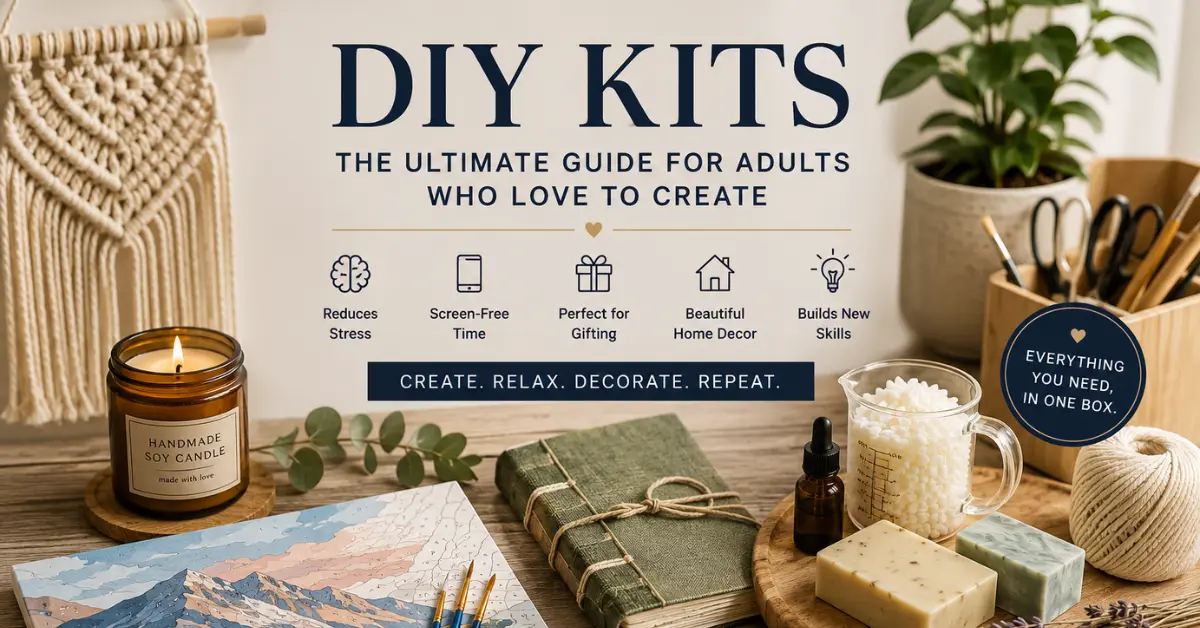
You do not need to be an artist. You do not need experience. You just need the right DIY kit and a little free time.
DIY kits give adults a simple, satisfying way to create something beautiful at home — no supply runs, no guesswork, no wasted materials. Everything you need arrives in one box, ready to go.
Whether you want to relax, pick up a new skill, or make something worth displaying in your home, this guide covers the best DIY kits available, how to choose the right one, and tips to get the most out of every project.
Let us get started.
DIY Kits: The Ultimate Guide for Adults Who Love to Create

You do not need to be an artist, a woodworker, or a craft expert to make something genuinely beautiful. All you need is the right DIY kit — and a little curiosity.
DIY kits have quietly become one of the most popular ways for adults to decompress, learn new skills, and fill their homes with things they actually made. Whether you want to spend a quiet evening at the kitchen table or find a new weekend hobby, there is a DIY kits out there built exactly for what you are looking for.
This guide covers everything you need to know — the best types of DIY kits available, how to choose the right one for your skill level and lifestyle, the mental health benefits most guides skip over, and practical tips to get the most out of your experience. By the end, you will know exactly where to start.
What Are DIY Kits and Why Are Adults Obsessed With Them?
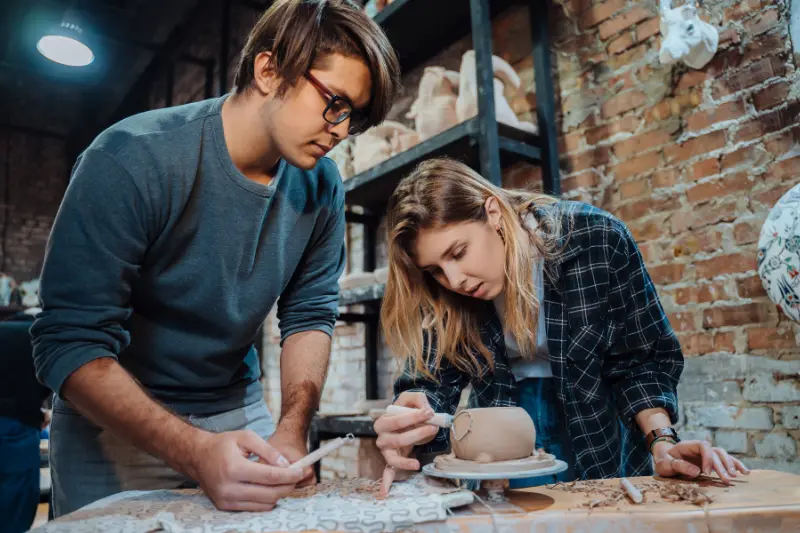
A DIY kits is a curated package that contains all the materials, tools, and instructions you need to complete a specific craft or creative project. Instead of sourcing supplies yourself, everything arrives in one box, ready to go.
What makes DIY kits so appealing to adults specifically is the combination of structure and creativity. You get a clear goal and the right tools to reach it, but the process of making is entirely yours. That balance is hard to find in other hobbies.
Here is why so many adults are reaching for DIY kits right now:
- Stress relief — Hands-on creativity activates the same part of the brain as meditation, according to research in occupational therapy
- Screen-free time — A welcome break from phones, laptops, and constant notifications
- Tangible results — In a world of intangible digital work, finishing something you can hold and display is deeply satisfying
- Skill building — Many people discover a genuine new skill through a kit they bought on a whim
- Gifting — Handmade items carry far more emotional weight than store-bought ones
- Home decor — Finished projects from DIY kits often become real, beautiful pieces in your home
The Real Mental Health Benefits of DIY Kits (What Competitors Do Not Tell You)
Most DIY guides jump straight to product lists. But understanding why making things is good for you helps you choose the right type of kit for your specific needs — and stick with it.
Research in neuropsychology shows that repetitive, focused hand activity — knitting, painting, carving, weaving — triggers a mild flow state similar to mindfulness meditation. Your nervous system calms, your attention sharpens, and the mental chatter quiets.
Here is what specific types of DIY activity do for your brain and body:
- Repetitive crafts (knitting, macramé, embroidery) — Lower cortisol levels, reduce anxiety, improve sleep quality
- Focused building (woodworking, 3D puzzle kits) — Boost problem-solving skills, improve spatial reasoning, build patience
- Painting and color-based crafts — Elevate mood through color psychology, encourage emotional expression
- Scent-based crafts (candle making, soap making) — Engage the olfactory system, which is directly linked to memory and emotional regulation
- Learning-based kits (bookbinding, leatherwork) — Build self-confidence and a sense of mastery
Knowing this, you can match your DIY kit choice to what you actually need right now — not just what looks appealing in a photo.
Types of DIY Kits for Adults: A Complete Breakdown
1. Candle Making Kits
Candle making kits are among the most popular DIY kits for adults, and for good reason. They are approachable for beginners, produce a genuinely useful result, and engage your sense of smell in a way most crafts cannot.
What a good candle making kit includes:
- Soy wax or beeswax
- Cotton wicks and wick holders
- Fragrance oils in multiple scents
- Heat-safe pouring pitcher
- Thermometer
- Glass or tin containers
- Step-by-step instructions
2. Macramé Kits
Macramé is the art of knotting rope or cord into decorative patterns. It has had a massive resurgence in recent years because the finished pieces — wall hangings, plant hangers, table runners — look genuinely stunning in modern homes.
What a good macramé kit includes:
- 100% cotton cord in one or more thicknesses
- A wooden dowel or ring for mounting
- Detailed instruction booklet or access to video tutorials
- A comb for fringe finishing
- Measuring tape
What most guides miss: Macramé is one of the few DIY kits where you can display the finished piece as serious home decor. A well-made macramé wall hanging rivals anything you would buy in a boutique home store.
Skill level: Beginner to intermediate Time to complete: 2 to 5 hours depending on the design Best for: Living rooms, bedrooms, bohemian or natural decor styles
3. Paint by Numbers Kits
Paint by numbers kits have evolved far beyond the simple children’s sets of the past. Modern adult paint by numbers kits feature museum-quality canvases, professional acrylic paints, and detailed designs ranging from impressionist landscapes to abstract art.
What a good paint by numbers kit includes:
- Pre-printed numbered canvas (linen or cotton)
- Set of acrylic paints labeled to match canvas numbers
- Multiple brush sizes
- Reference image
- Instructions
What sets premium kits apart: Look for rolled canvas rather than folded, fine-tipped detail brushes, and paints with good pigment density. Cheap kits use watered-down paint that requires too many coats and bleeds between sections.
Skill level: Beginner — no artistic experience required Time to complete: 5 to 20+ hours (great for long-term projects) Best for: Art lovers, people who want statement wall art, relaxing weekend activity
4. Embroidery Kits
Hand embroidery is one of the oldest textile arts in the world, and modern embroidery kits make it completely accessible for beginners. The result — a framed hoop of hand-stitched botanicals, animals, or lettering — is a beautiful piece of wall art.
What a good embroidery kit includes:
- Pre-printed embroidery hoop with fabric
- Embroidery floss in the correct colors
- Needles in multiple sizes
- Instructions with stitch guide diagrams
- Sometimes: a magnifying hoop for detail work
What competitors miss: Embroidery is uniquely portable. Unlike candle making or woodworking, you can take your embroidery kit anywhere — on a commute, to a coffee shop, to a friend’s house. The barrier to starting is essentially zero.
Skill level: Beginner to intermediate Time to complete: 3 to 10 hours depending on complexity Best for: Quiet evenings, travel-friendly craft, textile wall art
5. 3D Wooden Puzzle and Model Kits
3D wooden puzzle diy kits are a category many craft lists ignore entirely, yet they are one of the most satisfying DIY experiences available. These kits use laser-cut wooden pieces that you assemble — without glue in many cases — into detailed models of animals, vehicles, buildings, clocks, and mechanical contraptions.
What a good 3D wooden puzzle kit includes:
- Pre-cut wooden sheets with punch-out pieces
- Assembly instruction booklet with numbered steps
- Optional: gears, rubber bands, or small motors for moving models
- Optional: stain or paint for finishing
Why they stand out: When assembled, many 3D wooden puzzle kits become genuinely impressive display pieces. A working wooden clock, a detailed mechanical globe, or a miniature city skyline model earns compliments in any room.
Skill level: Beginner to advanced (varies significantly by model) Time to complete: 2 to 15+ hours Best for: Detail-oriented people, desk decor, unique gifts, STEM-minded adults
6. Soap Making Kits
Soap making diy kits come in two main types: melt-and-pour (beginner-friendly) and cold process (more advanced). Both produce beautiful, usable bars of soap that make excellent gifts.
What a good soap making kit includes:
- Soap base (glycerin, shea butter, or coconut oil)
- Fragrance oils or essential oils
- Colorants
- Molds in multiple shapes
- Mixing tools
- Instructions
What makes soap making unique: The finished product is both decorative and functional. Beautifully molded, scented soaps displayed on a bathroom shelf are a genuine home decor element — not just a craft project. Soap making also introduces you to basic chemistry in a very approachable way.
Skill level: Beginner (melt-and-pour) to intermediate (cold process) Time to complete: 1 to 3 hours active time; 24 to 48 hours curing Best for: Bathroom decor, gifts, skincare enthusiasts
7. Woodworking and Wood Burning Kits
Woodworking kits and wood burning (pyrography) kits give adults the satisfaction of working with their hands on a natural material. Wood burning kits in particular are accessible for complete beginners — you heat a pen-like tool and draw or trace designs onto wood.
What a good wood burning kit includes:
- Wood burning pen with interchangeable tips
- Dual temperature control
- Practice wood boards
- Tracing paper and transfer paper
- Safety stand
- Design templates
What makes wood burning stand out: The finished pieces — personalized cutting boards, decorative wall plaques, ornaments — are both beautiful and deeply personal. You can customize any design, making this one of the most versatile DIY kits for adults.
Skill level: Beginner to intermediate Time to complete: 1 to 6 hours Best for: Personalized gifts, rustic home decor, nature-inspired art
8. Terrarium and Plant Kit
Terrarium DIY kits let you build a miniature garden inside a glass container. They combine craft with living plant care — a combination that has proven benefits for mental health, including reduced anxiety and improved mood.
What a good terrarium kit includes:
- Glass container (open or closed design)
- Activated charcoal layer
- Potting soil and drainage pebbles
- Miniature plants or succulents
- Decorative moss or stones
- Tweezers and long-handled tools for planting
- Instructions
What competitors miss entirely: Terrariums are living DIY kits — they keep giving long after you finish building them. Caring for a small plant you built into a decorative piece creates a daily ritual that reinforces your sense of calm and accomplishment.
Skill level: Beginner Time to complete: 1 to 2 hours Best for: Desk decor, windowsills, nature lovers, low-maintenance plant care
9. Knitting and Chunky Knit Kits
Chunky knit kits use extra-thick yarn (sometimes called arm knitting yarn) to create cozy home pieces — blankets, pillows, scarves, and baskets — in a fraction of the time standard knitting takes. Many chunky knit kits do not even require needles; you knit with your hands or arms.
What a good chunky knit kit includes:
- Super bulky or arm-knitting yarn
- Giant knitting needles (if required)
- Row counter
- Stitch markers
- Pattern instructions with photo guides
The big advantage: The scale means you can complete a full blanket in an afternoon. That rapid sense of completion is especially motivating for beginners who struggle to stick with long-term craft projects.
Skill level: Beginner Time to complete: 2 to 4 hours for a throw blanket Best for: Bedroom and living room decor, cozy home styling, beginners
10. Resin Art Kits
Resin art kits are one of the most visually spectacular DIY options available. You mix two-part epoxy resin with pigments, glitters, and alcohol inks to create glossy, glass-like pieces of art — coasters, serving trays, wall art, and jewelry.
What a good resin art kit includes:
- Two-part epoxy resin (A and B components)
- Pigment powders or alcohol inks
- Silicone molds
- Gloves and protective equipment
- Mixing cups and stir sticks
- Heat gun or torch for removing bubbles
Important note: Always use resin in a well-ventilated space and wear gloves. Good kits will include proper safety guidance — this is something to look for before purchasing.
Skill level: Beginner to intermediate Time to complete: 30 minutes to 2 hours active; 24 to 72 hours curing Best for: Statement home decor, modern art, gifts
How to Choose the Right DIY Kit for You
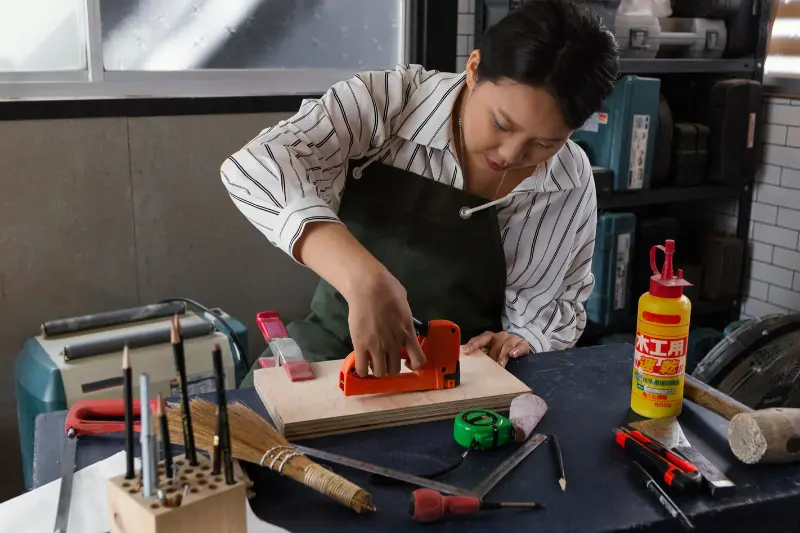
With so many options, picking the right DIY kit comes down to five simple questions.
1. What do you want to feel while you are making it? Calm and meditative? Choose embroidery, macramé, or knitting. Focused and problem-solving? Go for 3D wooden puzzles or woodworking. Free and expressive? Pick resin art or paint by numbers.
2. How much time do you realistically have?
- 1 to 2 hours per session: Candle making, soap making, terrarium kits
- Half-day project: Chunky knit blanket, small macramé piece
- Multi-session hobby: Embroidery, paint by numbers, woodworking
3. What do you want to do with the finished piece?
- Display it as home decor: Macramé, embroidery, 3D wooden models, resin art
- Give it as a gift: Candles, soap, wood burning projects
- Use it every day: Knit blankets, terrarium plants, soap
4. What is your budget? DIY kits range from around $15 for a basic embroidery hoop kit to $80 or more for premium resin art or 3D mechanical model kits. Most mid-range kits in the $25 to $50 range offer excellent quality and enough supplies to complete multiple projects.
5. Are you a complete beginner or do you have some experience? If you have never crafted before, start with candle making, terrarium kits, paint by numbers, or chunky knit kits. These have the lowest learning curve and the fastest results, which keeps your motivation high.
Tips to Get the Most Out of Your DIY Kit Experience
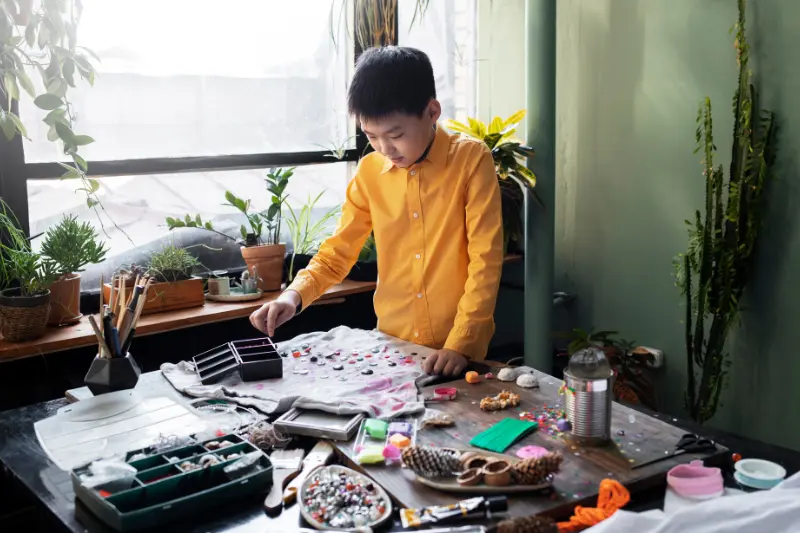
These are the details most DIY guides leave out — but they make a real difference.
Read all the instructions before you start. This sounds obvious, but most people skip it. Knowing all the steps before you begin prevents costly mistakes, especially with time-sensitive crafts like resin or candle making.
Set up a dedicated workspace. Even a cleared kitchen table or a folding craft table works. Having a consistent, organized space signals to your brain that it is time to focus and create — and it protects your furniture.
Don’t rush the curing time. Candles, soaps, and resin all require curing periods after the active crafting is done. Rushing this step is the single most common reason finished projects turn out poorly. Trust the process.
Take photos as you go. Progress photos are motivating, and they give you a reference if you ever want to recreate a project or try a variation.
Turn off notifications. The flow state that makes crafting so therapeutic requires at least 20 to 30 uninterrupted minutes. Put your phone face down or in another room.
Embrace imperfection. The Japanese concept of Wabi-Sabi — finding beauty in imperfection — applies beautifully to DIY. An uneven candle, a slightly off-center knot, an embroidery stitch that did not go exactly as planned — these are not mistakes. They are evidence that a real human made something real.
Start a kit journal. Write down what you made, what you loved, what you would do differently, and what kit you want to try next. This small habit transforms occasional crafting into a real, evolving creative practice.
DIY Kits as Home Decor: The Connection You Should Not Overlook
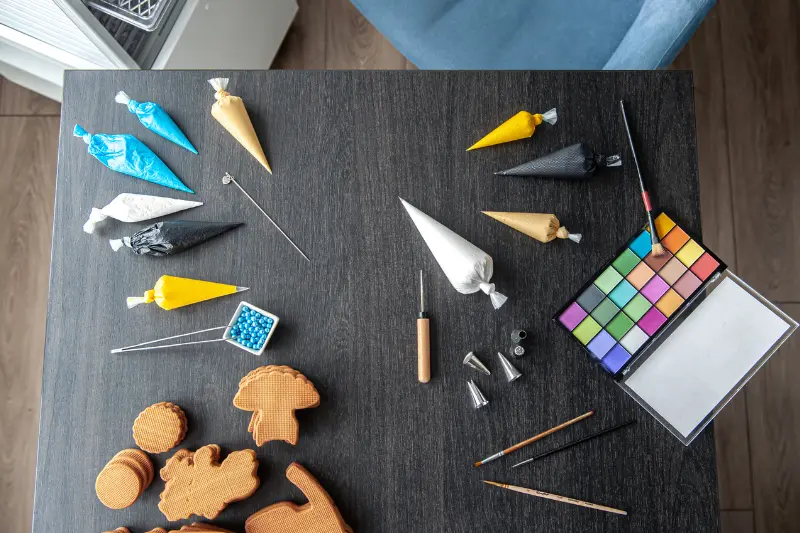
Most people think of DIY kits as a hobby activity and home decor as a separate purchase. But the two are deeply connected — and leaning into that connection is one of the smartest things you can do for both your home and your wellbeing.
When you make something yourself, it carries a story. A macramé wall hanging you knotted on a rainy Sunday afternoon means something fundamentally different from an identical piece bought online. It is yours in a way nothing store-bought can ever be.
Here is how to think about DIY kits as a home decor strategy:
- Choose kits that produce display-worthy pieces. Embroidery hoops, macramé, 3D wooden models, resin trays, and hand-painted canvases all work as genuine home decor.
- Match your kit style to your room’s aesthetic. Macramé and chunky knit pieces suit natural, bohemian spaces. Resin art and paint by numbers suit modern and contemporary interiors. Wood burning and 3D wooden models suit rustic, Japandi, or nature-inspired homes.
- Group handmade pieces intentionally. A gallery wall that mixes a framed paint-by-numbers canvas, an embroidery hoop, and a small wood-burned plaque creates a deeply personal, cohesive display that no store can replicate.
- Make pieces specifically for rooms you want to refresh. If your bathroom feels flat, a set of handmade soap bars on a soap dish adds warmth and texture. If your living room needs a focal point, a large macramé wall hanging provides it.
FAQs
What is the best DIY kit for a complete beginner?
Candle making kits and terrarium kits are the most beginner-friendly options. They have clear step-by-step instructions, short completion times, and forgiving processes that produce beautiful results even on the first try.
Are DIY kits worth the money?
Yes — especially compared to buying the individual supplies yourself. A quality DIY kit bundles everything you need at a price that is usually lower than sourcing items separately, and it removes the guesswork entirely. You also save the time you would spend researching which products to buy.
How long do most DIY kits take to complete?
It depends on the type. Simple kits like candle making or terrarium building take one to two hours. Medium-complexity kits like macramé or embroidery take three to eight hours. Long-form projects like paint by numbers or 3D wooden mechanical models can take ten to twenty-plus hours across multiple sessions.
Where is the best place to buy DIY kits?
Etsy is excellent for handcrafted and independent kits with unique designs. Amazon offers the widest range at various price points. Specialty stores like Michael’s or Hobby Lobby carry a good in-person selection. For 3D wooden puzzle and mechanical model kits specifically, brands like Wood Trick and Ugears offer exceptional quality directly on their own websites.
Are DIY kits safe for adults with no prior craft experience?
Yes. Most kits are designed specifically for beginners with no prior experience. However, kits involving heat (candle making, wood burning) or chemicals (resin, cold process soap) include safety guidelines that you should read carefully before starting. Always work in a well-ventilated space and follow all provided safety instructions.
Can the things I make from DIY kits actually be used as home decor?
Yes — and this is one of the most underappreciated aspects of DIY kits. Macramé pieces, embroidery hoops, resin art, wood-burned plaques, and 3D wooden models all function as genuine, display-worthy home decor. In many cases, they look far more interesting than mass-produced store alternatives.
Can I do DIY kits with a partner or as a group activity?
Absolutely. Many DIY kits work beautifully as couples’ activities or small group crafting sessions. Candle making, resin art, paint by numbers, and macramé are all excellent for this. Buying two or three of the same kit and crafting together is a wonderfully screen-free, genuinely bonding experience.
Conclusion
The hardest part of any new creative hobby is not learning the skill — it is starting. DIY kits remove every obstacle that usually gets in the way. The materials are there. The instructions are there. The project is defined. All you have to do is open the box.
Whether you want something to calm a busy mind, a new way to decorate your home with things that actually mean something, or a meaningful gift to give someone you love — there is a DIY kit built for exactly that.
Start with one. Pick the type that genuinely excites you, not the one that looks easiest. The best DIY kits are the ones you actually finish — and then immediately want to do again.
Your next favorite hobby might be sitting in a box right now, waiting for you to open it.